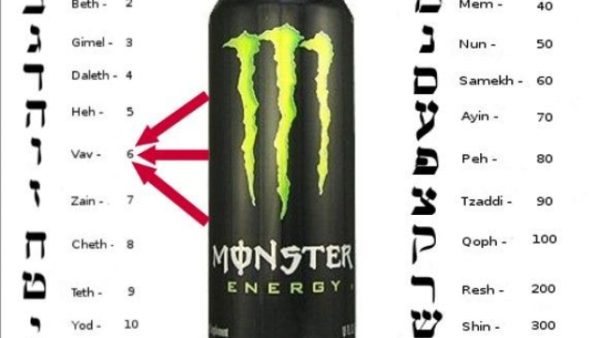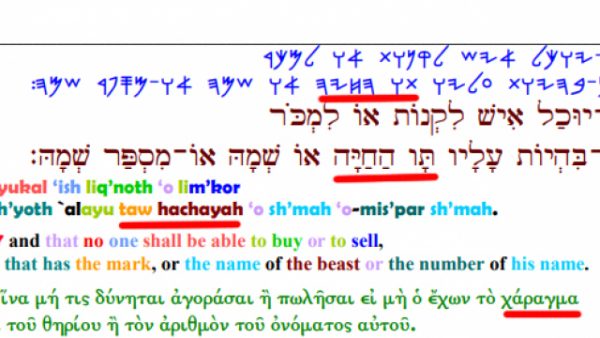
Covid GREEN PASS as the Mark of the BEAST in Hebrew
The Covid GREEN PASS in Israel is called TAV (sign) YAROK (green) The Hebrew version of Revelation calls the Mark of the Beast TAV…
Ok. Here is a quick primer in Hebrew specifically around the Hebrew name for God, in English, “Elohim” or in Hebrew, “אלוהים.” (My font’s…
AMAZING THINGS THAT THE ANCIENT HEBREW CALENDAR HAS TO SUGGEST TO US ABOUT THE COMING APOCALYPSE Part 2 You will recall in my first…
I do NOT mean "bed". But rather how it is being used in some specific verses:
Num. 31:17, 18, & 35; Jdgs.12:11 & 12; Ezk 23:17)
What does the word "mishkav" as mentioned ONLY in
Num. 31:17,18, & 35; Jdgs.21:…
Most translations seem to agree that “Jealous” is the best translation for this passage. For example:
Exodus 34:14 (NASB)
—for you shall not worship any other god, for the LORD, whose name is Jealous, is a jealous God—
However, Young’s Literal Translation chooses to use “Zealous”, instead:
Exodus 34:14 (YLT)
for ye do not bow yourselves to another god — for Jehovah, whose name [is] Zealous, is a zealous God.
What is the original word used here and what does it mean? Is “jealous” a good translation of it or does the original word carry a broader meaning than that?
How is Genesis 19:24 best translated?
Some translations translate it by apparently saying there are two Yahweh(s) involved in the act:
ESV: Then the LORD rained on Sodom and Gomorrah sulfur and fire from the LORD out of …
QUESTION about the HEBREW words describing metals and actions of the 4th beast in Daniel 7:7ff [Att all resident Hebrew scholars in the group…
How do the Greek and Hebrew read about Acts 1:8? (Finis J. Dake)
THE MEANING OF SANCTIFICATION The term for ‘sanctification’ as used in the New Covenant is HAGIOSMOS and means basically ‘set apart’, in the sense…
Exodus 20:13 (KJV)
Thou shalt not kill.
Many political statements have been made about this verse. This translation has been used by many to support their pacifist desires. However, it seems that most translations ha…
There is an old question on Christianity.SE which I suggested that it should also be asked here – since we don’t migrate OLD questions. In doing so, I noticed that the OP hasn’t been really active and I suspect that it will never be asked here. With that said:
Genesis 24:2 NIV
One day Abraham said to his oldest servant, the man in charge of his household, “Take an oath by putting your hand under my thigh.
Genesis 47:29 NIV
As the time of his death drew near, Jacob called for his son Joseph and said to him, “Please do me this favor. Put your hand under my thigh and swear that you will treat me with unfailing love by honoring this last request: Do not bury me in Egypt.
Leviticus 7:33 NIV
The right thigh must always be given to the priest who offers the blood and the fat of the peace offering.
Is this a translation concern? What do they REALLY mean?