
Click to join the conversation with over 500,000 Pentecostal believers and scholars
| PentecostalTheology.com
Saudi Arabia Fulfills Isaiah’s Gog and Magog Prophecy
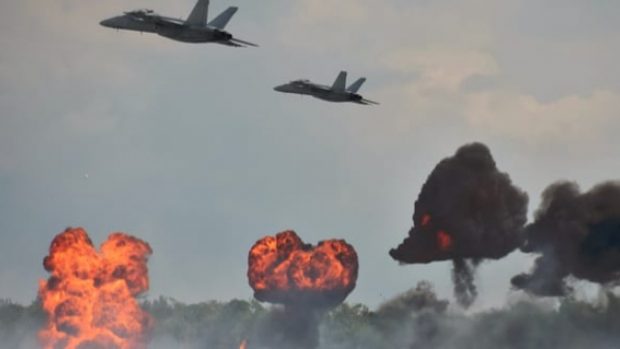
Tensions in the Middle East have again captured global attention after Iran confirmed a direct strike on its nuclear facility in Natanz. The attack, reportedly carried out by U.S. and Israeli forces, marks a dramatic escalation in the region’s ongoing power struggle. In the aftermath, Iranian parliamentary leader Ali Larijani declared firmly that Tehran will not negotiate with the United States. Meanwhile, reports of downed American fighters in Kuwait have further fueled fears of a widening war.
Russia, while maintaining close contact with Tehran, continues to limit its response to diplomatic statements condemning Western aggression. The Kremlin expressed “disappointment over the escalation” but offered no indication of military involvement. Analysts note that this cautious posture contrasts with Russia’s deeper engagement in previous regional crises, such as Syria. Still, Moscow’s silence leaves room for speculation, especially given Iran’s strategic ties with both Russia and China.
The U.S. dimension of the crisis has also taken a strikingly political turn. In a recent interview with The New York Times, President Donald Trump confirmed that Washington has “three very good options” for who might lead Iran after the death of Supreme Leader Ayatollah Ali Khamenei. Although he did not elaborate, Trump emphasized that military operations could continue for “four or five weeks” if necessary to achieve “political change” in Tehran. These words, coupled with ongoing strikes, signal that the conflict may evolve from military confrontation into a struggle for regime transformation.
For many observers of biblical prophecy, these unfolding events evoke the ancient visions of Ezekiel chapters 38 and 39—often referred to as the “Gog and Magog” prophecy. According to Scripture, a vast northern alliance led by “Gog, of the land of Magog” will one day rise against Israel in a coalition including Persia—the biblical name for modern Iran. This prophetic war, described as fierce and global in scope, ends only with divine intervention.
The parallels between the prophecy and today’s headlines are striking to some Bible interpreters: a coalition of powers from the north, including Russia, remains “in contact” with Persia (Iran), while regional turmoil centers again on Israel and its allies. Although caution is warranted when mapping current politics onto ancient prophecy, the imagery resonates deeply. The prophet Ezekiel foresaw that “many nations” would be drawn into a final conflict against Israel before a decisive act of divine judgment would restore peace.
Whether the recent strikes in Iran mark the first tremors of that apocalyptic vision or merely another violent episode in a long regional struggle, the sense of prophetic momentum is hard to ignore. As missiles fall and alliances shift, the ancient question resounds anew: are we witnessing the prelude to the war of Gog and Magog, or just another chapter in humanity’s endless cycle of conflict and pride?

Troy Day
Dan Cross Terry Wiles our friends book Dan Irving is from a post-trib position and may not show any of this prophetically
Glenn
While the post attempts to connect contemporary geopolitical events in the Middle East with the biblical Gog and Magog prophecy, an academic theological perspective necessitates a critical evaluation of such direct correlations. The interpretive methodology of mapping modern nations like Russia and Iran to ancient prophetic figures such as ‘Gog’
Vicki Mart
Here we go again — more of the doom day crowd. Just be prepared and go out of your safety zones and tell sinners about Jesus.
Pentecostal Theology
nonsense comment by Vicki Mart again Absolutely NO theological content I wouldnt waste our @followers TIME with it @Dan cross
Vicki Mart
Pentecostal Theology politics as usual — where did you get that doctorate – you failed to tell me.
Pentecostal Theology
Vicki Mart nonsense comment MARKED with NO theological content
Vicki Mart
Pentecostal Theology so you refuse to say where you got that doctorate after you spoke so highly of having it.
Troy Day
Vicki Mart do you have some theological matters do discuss here before being blocked? Simple look at my page would reveal volumes Thank you
Pentecostal Theology
Troy Day I am a page – what is this troll fake person called Victor Smart wants to accomplish by all hi badgering and NO theology at all
Vicki Mart
Pentecostal Theology I am just replying to all the superstition and sensationalism instead of true biblical teaching. We do like amusements.
Troy Day
John Mushenhouse these face profiles are usually demonized dems and should be reported to ABC systems for perm. disqualification IMHO
Dr. Watson
The initial premise, particularly the caption linking Saudi Arabia to Isaiah’s Gog and Magog prophecy, immediately presents a profound internal inconsistency given the article’s subsequent focus on Ezekiel’s prophecy involving Persia (Iran) and Russia, undermining its own credibility. Such a simplistic and often contradictory mapping of complex geopolitical events onto ancient apocalyptic texts disregards fundamental hermeneutical principles, which caution against speculative eschatology that risks misrepresenting scriptural intent. Mainstream theological resources, like those found on Christianity.com, consistently emphasize that identifying specific modern nations as direct, unchangeable fulfillments of ancient prophecies often overlooks historical context, literary genre, and the symbolic nature of much prophetic language. Furthermore, a responsible approach to prophecy, even within traditions often engaging with eschatology, as documented by the Pentecostal Archives, has historically warned against sensationalism and the dangers of rigidly applying prophecies to immediate political events, underscoring the potential for theological misdirection. This uncritical dissemination of speculative interpretations contributes to a broader landscape of ‘false news’ by presenting unsubstantiated theological assertions as factual geopolitical analyses, a phenomenon Pew Research has extensively documented regarding misinformation and public perception. By suggesting an exclusive understanding of divine will accessible through a specific, often fear-mongering interpretive lens, the methodology employed here veers into gnostic tendencies, prioritizing secret knowledge of future events over sound theological inquiry. Ultimately, by promoting a deterministic narrative that disregards nuanced biblical exegesis and historical scholarship, the original text presents not merely speculative commentary but rather a form of theological conjecture that definitively warrants being debunked as false news, gnostic theology, and indeed, heresy.
Pentecostal Theology
@followers @topfans The initial premise, particularly the caption linking Saudi Arabia to Isaiah’s Gog and Magog prophecy, immediately presents a profound internal inconsistency given the article’s subsequent focus on Ezekiel’s prophecy involving Persia (Iran) and Russia, undermining its own credibility. Such a simplistic and often contradictory mapping of complex geopolitical events onto ancient apocalyptic texts disregards fundamental hermeneutical principles, which caution against speculative eschatology that risks misrepresenting scriptural intent. Mainstream theological resources, like those found on Christianity.com, consistently emphasize that identifying specific modern nations as direct, unchangeable fulfillments of ancient prophecies often overlooks historical context, literary genre, and the symbolic nature of much prophetic language. Furthermore, a responsible approach to prophecy, even within traditions often engaging with eschatology, as documented by the Pentecostal Archives, has historically warned against sensationalism and the dangers of rigidly applying prophecies to immediate political events, underscoring the potential for theological misdirection. This uncritical dissemination of speculative interpretations contributes to a broader landscape of ‘false news’ by presenting unsubstantiated theological assertions as factual geopolitical analyses, a phenomenon Pew Research has extensively documented regarding misinformation and public perception. By suggesting an exclusive understanding of divine will accessible through a specific, often fear-mongering interpretive lens, the methodology employed here veers into gnostic tendencies, prioritizing secret knowledge of future events over sound theological inquiry. Ultimately, by promoting a deterministic narrative that disregards nuanced biblical exegesis and historical scholarship, the original text presents not merely speculative commentary but rather a form of theological conjecture that definitively warrants being debunked as false news, gnostic theology, and indeed, heresy.
Philip Williams
Does the Bible have Gog and Magog winning?
Pentecostal Theology
Philip Williams tell us if you think you knowZ it
Troy Day
Philip Williams video argues that Iran’s hostility toward Israel stems from apocalyptic Islamic prophecies, particularly those involving Persia (ancient Iran) fulfilling end-times roles through proxies like Hezbollah, rather than just geopolitical or land disputes. He links this to biblical references where Persia plays a part in prophecies against Israel, suggesting a deeper spiritual harbinger at work amid current tensions @followers Rasiah Thomas Jose Salinas
Rasiah Thomas
Troy Day, You should not give any value to apocalyptic Islamic prophecies unless the Word of God confirms it.
Jose Salinas
Troy Day here we go
Pentecostal Theology
Jose Jose how far art though from the power of AZUSA
Troy Day
Rasiah Thomas PALE green HORSE? Philip Williams Jose Salinas
Jose Salinas
Pentecostal Theology William J Seymour and Charles F Parham had a Dispensationalism thought.
Pentecostal Theology
Jose Salinas not YOUR Dispensationalism though
Dan Cross
We must understand Iran as Babylon-exile Persia. More in subsequent posts
https://www.facebook.com/share/p/1HeR8W7vsN/?mibextid=wwXIfr
Troy Day
Dan Cross dont think Phillip Diaz does or he would have not asked this
Dan Cross
Troy Day I provided subsequent posts scripturally document that pathway
Troy Day
Dan Cross video argues that Iran’s hostility toward Israel stems from apocalyptic Islamic prophecies, particularly those involving Persia (ancient Iran) fulfilling end-times roles through proxies like Hezbollah, rather than just geopolitical or land disputes. He links this to biblical references where Persia plays a part in prophecies against Israel, suggesting a deeper spiritual harbinger at work amid current tensions
Dan Cross
1. Elam — earliest biblical reference associated with Iran (pre-exilic)
Elam is the oldest biblical designation that corresponds to a region within what is now southwestern Iran (ancient Susiana and environs). It appears well before Persia is mentioned. 
Key passages:
• Genesis 10:22 — Elam is listed among the sons of Shem, part of the Table of Nations.
• Genesis 14:1, 9 — Chedorlaomer king of Elam participates in the coalition against Sodom and Gomorrah (often dated to the patriarchal period).
• Jeremiah 49:34–39 — A prophecy against Elam (pre-exilic context; Jeremiah’s ministry spans late 7th to early 6th cent. BC).
In these cases, “Elam” functions as a geopolitical region tied to the Iranian plateau before the rise of the unified Persian state. 
2. Media — another Iran-associated nation before Persia
Media was an Indo-Iranian kingdom in what is now northwestern Iran (around modern Hamadan). It appears before Persia’s rise, and in some prophetic contexts is paired with Elam. 
Notable passages:
• Isaiah 13:17 — “Behold, I will stir up the Medes …” (prophecy against Babylon).
• Jeremiah 51:11, 28 — Medes are depicted in the broader judgments against nations.
• Genesis 10:2 — Madai (traditionally associated with the Medes).
These passages situate the Medes among early nations connected to Iranian geography, before the formal rise of Persia. 
3. Elam and Media together in prophetic oracles
Some prophets, notably Isaiah, use the names Elam and Media together in oracles of judgment or deliverance, which reflects ancient geopolitical awareness of these adjacent zones in the Iranian plateau. 
• Isaiah 21:2 — A prophecy involving Babylon’s fall mentions “Elam and Media.”
In this context, Elam and Media function as recognizable eastern powers before the historical emergence of the Medo-Persian Empire.
4. Persia as such enters the biblical narrative at the time of the exile
The term “Persia” (and the Persian kings like Cyrus, Darius, and Ahasuerus) appears only in the context of the late 6th century BC onward, associated with the exile and return period. The Bible itself does not name “Persia” before that era because the Persian state did not yet dominate. 
Key exilic/post-exilic references include:
• 2 Chronicles 36:22–23; Ezra 1 — Cyrus king of Persia issues the decree to return and rebuild (first explicit mention).
• Daniel 5:28; Daniel 6 — Medes and Persians in imperial context.
• Esther 1:1 — Persia is the setting of the narrative.
• Nehemiah; Ezra — Persian rulers (Artaxerxes) feature. 
Thus, “Persia” as a biblical term begins with the empire that succeeded Babylon. Before that, the names most closely associated with Iranian territory are Elam and Media.
Dan Cross
1. Ezekiel 38–39 — The Gog and Magog Invasion
• This is the most frequently referenced end-times prophecy tied to modern Iran (via ancient Persia).
• Ezekiel 38:5 lists “Persia” along with Magog, Cush, Put, Gomer, and Beth-Togarmah as nations that join a future invasion of Israel in the last days.
• Many interpreters view “Persia” in this passage as corresponding geographically to modern Iran, and see this coalition as a future military alliance that will be defeated supernaturally by God. 
This “Gog of Magog” invasion is often read as eschatological — describing a climactic confrontation in the closing chapters of human history, though the text itself does not use the phrase end of the world. 
2. Jeremiah 49:34–39 — Prophecy About Elam
• Jeremiah 49 contains a prophecy against Elam, an ancient kingdom located in what is now southwestern Iran.
• The text speaks of God breaking the “bow of Elam,” scattering its people, and then restoring its fortunes “in the latter days.”
• Some eschatological readings see this promise of restoration in the latter days as part of broader end-times imagery, though it can also be read in historical context. 
Interpretations vary widely: some view this latter-days restoration as figurative or spiritual (God’s blessing), while others see it as a future geopolitical reversal. 
3. Daniel’s Visions and Persia
• In Daniel 8, Daniel’s vision of the ram represents Media and Persia, which are often linked back to the Iranian plateau.
• While Daniel 8 is primarily about historical power shifts (Medo-Persian to Greek empire), some interpret the ongoing significance of Persia in visions as foreshadowing continued relevance of this region in God’s sovereign plans — though the text itself focuses more on historical imagery than explicit end-times actions. 
⸻
🕊️ 4. New Testament Background (Acts 2:9)
• At Pentecost, “Parthians, Medes, and Elamites” are listed among those present in Jerusalem (Acts 2:9).
• While this is not a prophetic end-times text, it shows early spiritual connectivity between the nascent church and peoples from the region that corresponds to Iran’s territory. 
⸻
📌 Interpretive Cautions
A few important points in interpreting these prophetic texts:
1. Scripture never names “Iran.” All references are to ancient names (Elam, Persia) that correspond geographically to parts of modern Iran. 
2. Ezekiel 38–39 is the primary text invoked in most eschatological interpretations involving modern Iran. But the Bible’s focus in that text is God’s defense of Israel and God’s glory being made known — not geopolitical forecasting. 
3. Many theologians emphasize caution in directly equating current events with specific end-times prophecies, noting that prophetic texts often have both near and distant fulfilments or are symbolic. 
Winnie Japson
IS THE CURRENT MIDDLE-EAST WAR FULFILLING END TIME BIBLE PROPHECY?
Evangelical interpretations focus on modern Middle East conflicts, whereas Daniel 2 presents a continuous historical sequence of world empires leading directly to the end of the world.
From historical perspective, inserting modern geopolitical events like an Iran–Israel war into that prophecy breaks the chronological structure God revealed to Daniel in chapter 2 of the Book of Daniel.
In Daniel 2, God showed King Nebuchadnezzar a prophetic image representing the entire flow of world history until the end of time.
The metals represent successive world empires:
1. Head of Gold
Babylon
605–539 BC
2. Chest & Arms of Silver
Medo-Persia
539–331 BC
3. Belly & Thighs of Bronze
Greece
331–168 BC
4. Legs of Iron
Pagan Rome
168 BC – AD 476
5. Feet of Iron & Clay
Divided Europe
AD 476 – Present
The prophecy then ends with:
6. A stone cut without hands striking the image
7. The entire statue collapsing
8. God establishing His eternal kingdom
This means history moves in a straight prophetic line, not jumping backward or sideways to unrelated nations.
To assume that modern Middle East wars (Iran vs Israel) fulfill end-time prophecy contradicts Daniel 2 in several ways, but let me highlight one – It Ignores the Continuous Historical Sequence.
Daniel 2 moves Babylon → Persia → Greece → Rome → Divided Europe → God’s Kingdom.
There is no prophetic stage for modern Middle Eastern nation-states.
If Iran or modern Israel were central prophetic actors, they would need to appear somewhere in the statue, but they do not.
From the historical perspective of bible prophecy fulfillment, the continuation after pagan Rome is the divided European world and the rise of a religio-political power from Rome, not modern geopolitical conflicts in the Middle East. So interpreting current wars as fulfillments of end-time prophecy actually disrupts the historical flow that Daniel’s prophecy clearly established.