
Click to join the conversation with over 500,000 Pentecostal believers and scholars
| PentecostalTheology.com
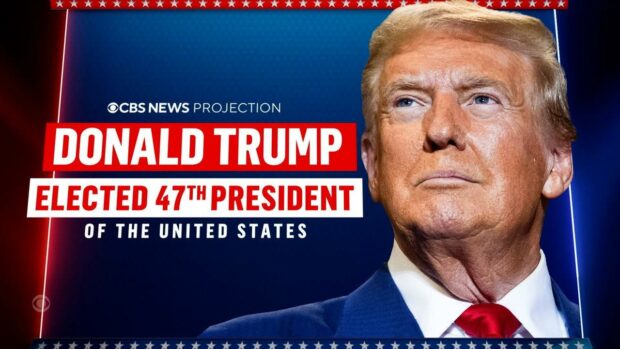
Trump on Tuesday proclaimed “God is very proud” of him and the job he has done since returning to office during a sprawling 105-minute press briefing at the White House.
“Last year, you told me that you believed that the reason you won the election is because God put you in this place so that you could save the world,” a male reporter asked. “Looking back [after] one year, do you feel like god is proud of the effort that you’ve [given]?”


Troy Day
Do you feel God Is Very Proud of President Trump? And most importantly WHY? @followers
John Mushenhouse
How would I know. –Isa 55:8-9 “For My thoughts are not your thoughts,
Nor are your ways My ways,” says the Lord.
9 “For as the heavens are higher than the earth,
So are My ways higher than your ways,
And My thoughts than your thoughts.
Troy Day
John Mushenhouse I’m far less concerned with whether God is ‘proud’ of any political leader, and far more concerned with whether that leader (and we) walk in repentance, humility, and obedience to Christ, because ‘God resists the proud, but gives grace to the humble’ (James 4:6).”
Ken Van Horn
God hates pride. He always resists the proud and He always gives grace to the humble.
Pentecostal Theology
Joseph Kidwell John Mushenhouse what does drinking Ken Van Horn mean?
Troy Day
Ken Van Horn I’m far less concerned with whether God is ‘proud’ of any political leader, and far more concerned with whether that leader (and we) walk in repentance, humility, and obedience to Christ, because ‘God resists the proud, but gives grace to the humble’ (James 4:6).”
“Scripture is clear that ‘God hates pride’ because it sets the creature against the Creator and refuses to acknowledge absolute dependence on His mercy (Prov. 6:16–17; 16:5; Isa. 2:11–12).
At the same time, He ‘always resists the proud’ by opposing their self‑exaltation, bringing their plans low, and exposing the illusion that any human leader is beyond His judgment (Jas. 4:6; 1 Pet. 5:5).
Yet the very God who resists pride ‘always gives grace to the humble,’ inviting all people—presidents and common citizens alike—to bow low, confess sin, and receive forgiveness and transformation through Christ.
The real question, then, is not whether God is “proud” of us, but whether we have humbled ourselves under His mighty hand, allowing Him alone to define righteousness, success, and greatness (Matt. 5:3–6; 23:12).
In a hyper‑politicized age, the church must model this humility by refusing to boast in any personality, instead boasting only in the cross and calling every leader and party to repentance, faith, and obedience to Jesus
Susan Brooks Thomas (FB)
Congratulations
J.D. King (FB)
J.D. King ? what seems to be the delay ?
Ron Pagel (FB)
The Canadia PM has directly attacked Christians, embraced China, renewed attacks on Pro-Life, embraced gender & transgender is… See more
Patricia Riley (FB)
Jonathan Cahn, a Messianic Jewish rabbi and author known for his prophetic, end-times-focused, and biblically-based analysis of American events, has positioned Donald Trump as a critical figure in what he describes as a divine mandate to turn America back to God. Cahn’s views on Trump, often delivered as “prophetic words” or “messages,” frame the former president as a vessel in the hands of God for a specific historical purpose
John Ballard (FB)
I dare not say much fearing the wrath of everybody in this conversation, but I need to mention that there is a growing number of observers who do not fall neatly into the binary world forming most of our lives, a world now penetrated from many angles that don’t fall neatly into either camp.
https://youtu.be/VJCDRjRLgb8?si=GtFn8Gr0oIqmSpYM (FB)
Why not focus on who actually runs our government and determines its foreign policy and wars?
Mark Dean Cooke (FB)
You are delusional
Ted Edelman (FB)
Trump, is one of the last tests of the Wheat and the Chaff, yes he is abrasive etc, but we had Kings that God loved who also had great issues in the past, what he is doing is going against dark dark forces. And if people pay attention to what rallies Against Trump, its the forces that love Abortion, those who are Pro Trans, theose that support the Mutilation of Children in the name of Trans, the whole I can be anything I want, the Socialist, the Communist, those that we fought wars against, are all Trumps enemies . . .
Joe Fiorentino (FB)
I live in Canada and can say that Americans and Canadians can be clueless about one another thanks to carefully designed narratives. I don’t even feel comfortable posting anymore knowing that all of this is monitored.
Bradley John Bessell (FB)
A bit extreme don’t you think ?
Troy Day
@followers @highlight Philip Williams Jose Salinas
Troy Day
RT Dan Cross John Mushenhouse Philip Williams This meme sounds orderly and intuitive, but when measured against the biblical record, it collapses several distinct New Testament categories into later, post-apostolic structures. Below is a scripture-based critique, not polemical but textual. ⸻ 1. The Core Problem: It Assumes a Hierarchy Scripture Never Explicitly Establishes The meme presents Pastor → Bishop → Elder as distinct offices with differentiated authority. In the New Testament, however: • Pastor (ποιμήν / poimēn) • Elder (πρεσβύτερος / presbyteros) • Overseer/Bishop (ἐπίσκοπος / episkopos) are functionally overlapping, often used interchangeably for the same leaders. The meme reflects later ecclesial development, not apostolic-era church structure. 2. Pastor vs. Elder: Scripture Does Not Separate Them as Different Offices Meme Claim • Pastor: “Leads the local church,” “preaches,” “cares for the flock” • Elder: “Guides,” “counsels,” “supports the pastor” Biblical Record Scripture explicitly identifies elders as shepherds (pastors). Acts 20:17, 28 • Paul calls the elders (presbyteroi) of Ephesus • Then tells them: “The Holy Spirit has made you overseers (episkopoi) to shepherd (poimainō) the church of God” Same people. Three titles. One role. 1 Peter 5:1–2 “I exhort the elders… shepherd the flock of God, exercising oversight” There is no biblical category where elders merely “support the pastor.” Elders are the pastors/shepherds. ✔ Correction: Pastor is not a separate office from elder; it is a shepherding function of elders. The five-fold ministry from Ephesians 4:11 refers to five specific leadership roles God gives the church: apostles, prophets, evangelists, pastors (shepherds), and teachers, whose purpose is to equip believers for service, build up the body of Christ, promote unity in faith, and bring believers to spiritual maturity (fullness in Christ). These aren’t just offices but spiritual gifts functioning to mature the church. As such the these offices, pastor included, are subsets among elders, not to be understood as separate apart from them. This is an important distinction. 3. Bishop / Overseer: Not a Regional or Doctrinal Authority Figure Meme Claim • Bishop “oversees the local church” • “Sets doctrinal direction” • “Appoints & corrects leaders” • “Defends dispensational truth” Biblical Record In the New Testament: • Bishop = Overseer = Elder • Not a superior rank Titus 1:5–7 • Paul uses elder and overseer interchangeably in the same paragraph Philippians 1:1 “To all the saints… with the overseers and deacons” Plural overseers in one local church, not one ruling bishop. ⚠️ Major Anachronism • “Defends dispensational truth” is 19th-century theological construction, which may or may not be true, but it is not a biblical office requirement or function. • Scripture requires guarding the apostolic gospel, not a later system (Acts 20:27; Gal. 1:6–9). ✔ Correction: Bishop/overseer is a local shepherd-leader, not a doctrinal monarch or regional executive. Some would argue that the bishop/overseer functions equivalent to the pastor in New Testament settings. It is much later in church, history development that we began to see the office of the bishop emerge as distinct from that role. ⸻ 4. Leadership in the New Testament Is Plural, Not Singular Meme Assumption One pastor leads. Others assist. Biblical Pattern Plural elder leadership is the consistent norm. • Acts 14:23 – elders appointed in every church • Titus 1:5 – elders in every town • James 5:14 – call the elders (plural) • 1 Timothy 5:17 – elders who rule well No verse describes: • One senior pastor • Subordinate elders • A bishop above them ✔ Correction: Authority is shared, accountable, and communal. 5. What Scripture Does Distinguish Clearly Scripture does differentiate: A. Elders / Overseers • Teach sound doctrine (Titus 1:9) • Shepherd the flock (1 Pet. 5:2) • Govern spiritually (1 Tim. 5:17) B. Deacons • Serve practical needs (Acts 6; 1 Tim. 3) • Not teaching rulers C. Apostles (Foundational, Not Ongoing Office) • Sent eyewitnesses of Christ (Eph. 2:20) • Not replaceable by bishops The meme blurs these categories while inventing others. 6. Theological Implication (Why This Matters) This meme subtly: • Clericalizes leadership • Minimizes elder authority • Normalizes hierarchical control • Retrofits Scripture to later church polity Jesus warned against a hierarchical view of authority. “You know that the rulers of the Gentiles lord it over them… It shall not be so among you.” (Matthew 20:25–26) Ephesians 4 presents a deliberate inversion of hierarchical authority into supportive, equipping authority. Paul reframes leadership not as control over the church, but as service for the church’s growth. A. Authority Flows Downward, Not Upward Paul says Christ “gave” leaders to the church (Eph. 4:11). Authority is derived, not inherent. Leaders are gifts to the body, not rulers over it. This immediately undercuts status-based hierarchy. Authority exists because of Christ’s giving, not because of position. ⸻ B. Leaders Do Not Do the Work — They Enable the Work The purpose of apostles, prophets, evangelists, shepherds, and teachers is: “to equip the saints for the work of ministry” (Eph. 4:12) This is the inversion: • Not leaders doing ministry for passive people • But leaders empowering the whole body to minister Leadership success is measured by what others are enabled to do, not by how indispensable the leader becomes. ⸻ C. Maturity, Not Control, Is the Goal The aim is not compliance or uniformity, but: • Unity of faith • Knowledge of the Son of God • Full maturity (Eph. 4:13) Immature systems require tight control. Mature bodies require trust and mutual dependence. Authority decreases as formation increases. ⸻ D. Growth Comes from the Body, Not the Head Alone Christ alone is the Head (Eph. 4:15). Everyone else contributes: “the whole body… builds itself up in love, as each part does its work” (Eph. 4:16) Leaders do not monopolize spiritual supply. They help remove blockages so life can flow through all members. ⸻ E. Theological Bottom Line Ephesians 4 replaces positional hierarchy with functional authority: • Authority serves formation • Leadership equips, not dominates • Power is measured by multiplication, not retention ⸻ 7. Biblically Faithful Summary A more scriptural framing would be: • Elders / Overseers / Pastors → Same leaders, different descriptors of function • Plural leadership in each local church • Shepherding authority, not hierarchical domination • Doctrinal faithfulness to the apostolic gospel, not later systems ⸻ Bottom Line 📌 This meme reflects church tradition more than Scripture. 📌 The New Testament model is flatter, shared, and shepherd-centered. 📌 Titles describe functions, not ranks. This is not to say that the practicalities of function do not indicate some organizational structure in ecclesiastical practice. I just want to be clear as to how I see, scriptures revelation, unfolding, and how it differs somewhat from the meme.