
Click to join the conversation with over 500,000 Pentecostal believers and scholars
Peter A Vandever | PentecostalTheology.com
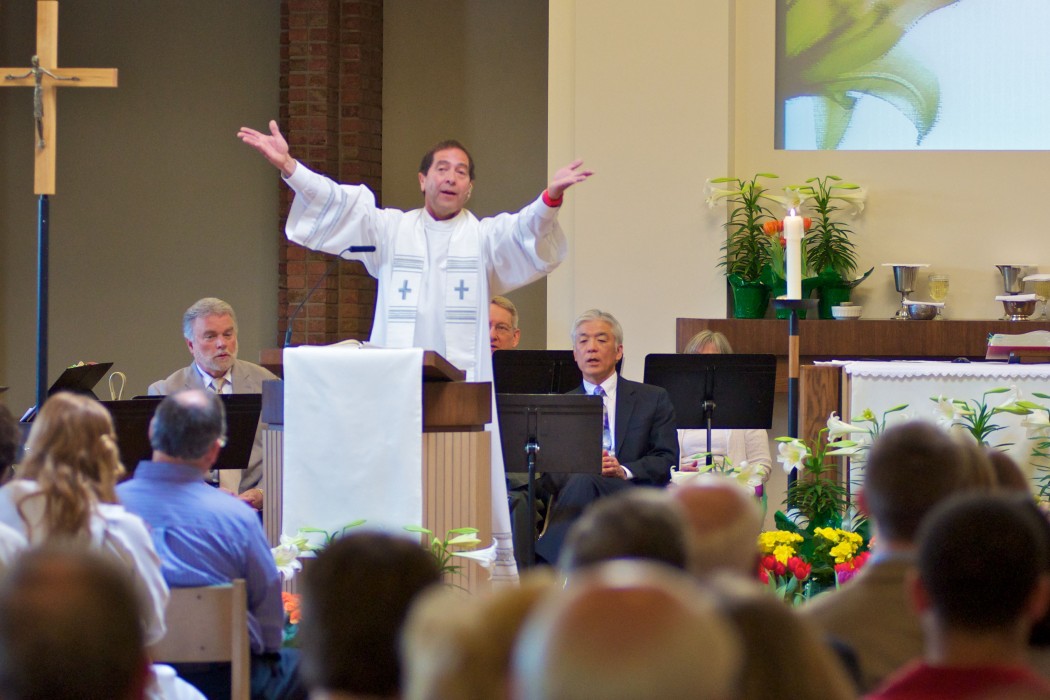
Why do pastors do sermonettes before offerings when it is clearly unbiblical to do so?
Ricky Grimsley [10/05/2015 11:42 PM]
Sometimes its to guilt people to give. Sometimes its to prove that they dont care about the money when they actually are just reminding you. Personally if i was pastor….i would put boxes in the entrances for people to drop their offerings in as they enter.
Stan Wayne [10/06/2015 8:07 AM]
Yes some CCs do and some don’t – but money is a biggie. But I think the whole concept of “pastor” is unbiblical or extra biblical too- also he has a vested interest. Very crass.

Varnel Watson
Love to hate them or hate to love them? Melvin Shomo Dan Irving
Curt Stewart
Where in the bible is it a sin to edify the people of God ?
If I don’t like or care for something doesn’t mean it’s a sin.
Eva Benevento
Traditions are not necessarily sin.
Jerry Eicher
2 Timothy 4:3
A.J. Bible
One would assume if a statement is made that something is “unbiblical” there would actually be scriptural evidence. Yet with this post there is none.its completely biblical to edify the congregation in God’s Word concerning tithes and offerings.
Varnel Watson
Well now we cant really find pastoral offering sermonets in the Bible now can we?
TimnJanay Richards
Malicah 3
Hebrews 7
Jesus speaking of the widow woman and her offering
Paul to the church in Phillipi
So Troy these are just a few
Varnel Watson
was any of these done BEFORE preaching a longer Sunday sermon as OP inquires?
A.J. Bible
“pastoral sermonettes” is your phrase. What we find in the Bible is doctrinal teaching on tithes and offerings. Paul continually taught on giving. This of course was read to the churches.
Varnel Watson
actually “pastoral sermonettes” belongs to the OP
A.J. Bible
1 Corinthians 16, 2 Corinthians 8, 9, Philippians 4.
Varnel Watson
Well A.J. Bible I read your verses but see no connection to OP Maybe we should ask Herrnhut Morton who posted it what he really meant or how Ricky Grimsley who commented there understood it. I read it as a brief word asking for money before the actual sermon
Ricky Grimsley
It was three years ago
Varnel Watson
your memory serves you well
A.J. Bible
You see no connection? Those are all letters to churches from Paul where he admonishes the churches on giving. Those are all literal examples of exactly what the OP says the Bible doesn’t do.
Varnel Watson
The question is did he do it with short sermonts before the major sermon. Obviously not if they are at the end of epistolar forma letters Also his asking was not from his church for the sake of his church where he was a pastor. Exegetically speaking, these examples do not answer our question ..wait you are also from SC wait a minute you are related to the other Bible
A.J. Bible
So if the pastor exhorts the congregation on the Biblical command of giving AFTER the sermon it’s ok?
A.J. Bible
Yes. He’s my father and pastor
Varnel Watson
Did Paul did it this way in any of his sermons? We do not have any Biblical proof
A.J. Bible
What is his letters? If not sermons?
Varnel Watson
Letters. Not sermons 🙂 Except if Paul sent a brief pre-letter before his main latter. Then we have a case
A.J. Bible
Lol.
A.J. Bible
Semantics
Leon Bible
Hey brother Troy Day would you also be against sharing Scripture before Water Baptism and Communion?
Varnel Watson
Leon Bible How is this relevant per the question in OP? Are you assuming offering is a sacrament like Water Baptism and Communion? Again all these questions should be directed to original poster Herrnhut Morton from whom we are yet to hear
Leon Bible
Troy Day To answer your question… It is relevant as a comparison of reading Scriptures in the Church services. If you are against reading Scriptures before the offering and the receiving of tithes, then you might also be against reading Scriptures before other parts of the service such as the Communion and Water Baptism. That is why the question was asked. In other words it helps to show inconsistencies in ones Biblical understanding. No, never said the Offering was a sacrament, but under the strict definition of the word it very well could be. That be as it may… There is no Scriptural authority to forbid the reading of Scripture before the offering.
Varnel Watson
Again it is NOT my question in OP 🙂 Leon Bible
Leon Bible
Troy Day Sorry but I thought since you asked: “Leon Bible How is this relevant per the question in OP? Are you assuming offering is a sacrament like Water Baptism and Communion?” That that was two questions from you to me. Was I mistaken?
Gary Rinehart
Amen
Scott Phillips
I think it’s a good opportunity to teach and encourage. Pro teaching at every opportunity