
Click to join the conversation with over 500,000 Pentecostal believers and scholars
| PentecostalTheology.com
Pneuma 27,1_f2_2-34 8/17/05 8:06 AM Page 3
Pentecostal Theology, Volume 27, No. 1, Spring 2005
S SP
Articles
John Paul II:
A Personal Account of His Impact and Legacy
Cecil M. Robeck, Jr.
I have been deeply saddened by the passing of His Holiness, John Paul II. In some ways I feel as though I have lost a personal friend. With the possible exception of the late David du Plessis, I doubt that there is another Pentecostal who has spent as much time with a pope as I have spent with John Paul II. His words and his life have challenged me again and again. It all began for me in 1985.
In March 1985 I became a member of the Commission on Faith and Order of the National Council of Churches. In preparation for the pope’s visit to the United States in 1987, the National Council of Churches pre- pared a simple welcome letter entitled, “Witnessing Together to a Divided and Hurting World.” I was invited to review it and to offer suggestions for its modification before the letter was published. Upon its completion, I was also invited to sign it. I did so. My signature and denominational affiliation were published as part of the letter, along with those of about 25 other Christian leaders.
That act of signing an open letter, finally published in September 1987, in which I welcomed John Paul II to the United States as a member of the Assemblies of God, set off a flurry of criticism and threats for which I was totally unprepared. It was my baptism of fire into the realm of Christians who are open to other Christians and those who are not.
Jack Chick, famous for his publication of provocative anti-Catholic tracts, wrote a scathing article in his tabloid, Battle Cry. “Leaders of non- Catholic denominations throughout the United States are tripping over each other to show that they really don’t stand for anything at all,” it began. He went on to note that while many who had signed this letter belonged to churches that teach doctrines that are “contrary to Roman Catholicism,” by signing this letter we were “calling the lack of a unified,
© 2005 Koninklijke Brill NV, Leiden pp. 3–34
1
Pneuma 27,1_f2_2-34 8/17/05 8:06 AM Page 4
Pentecostal Theology, Volume 27, No. 1, Spring 2005
world church (ruled by the Pope) as an intolerable scandal which hinders the proclamation of the Good News in Jesus Christ.”1
Chick went on to charge that while we had given “gushing acclaim” to John Paul II, he hadn’t “sacrificed one line of Roman dogma, or even had to soft-pedal his unswerving devotion to Mary. He has brazenly posed for cameras praying to a little idol of her. . . .” As if that were not enough, Chick finished by saying, “When your church informs you it is consid- ering abandoning truth to join with the world church you will understand why.” Then he listed the names and denominations of those who had signed the letter.2
I soon received several anonymous letters, at least eight very angry telephone calls from fellow Assemblies of God ministers, none of whom knew me, and a call from my District Superintendent, William O. Vickery who, when I explained the situation to him, was very understanding. Still, I learned very quickly what it was like to be identified with the “Antichrist,” by those closest to me, my fellow Pentecostals.
When John Paul II arrived in the United States, those who had signed the welcome letter were invited to participate in a private audience with him and to process with him in an ecumenical gathering in Columbia, South Carolina. Unfortunately, the letter of invitation, my ticket, and my desire to obtain the permission from my District Superintendent made it impossible for me to act upon it in time to accept the invitation. I was very disappointed.
Earlier that year, David Allan Hubbard, President of Fuller Theological Seminary, had asked me to help lead a dialogue between Evangelicals and Roman Catholics in the Los Angeles area. Fuller would recruit the Evangelical participants, while the Ecumenical Office of the Archdiocese would supply the Catholic participants. By the time that John Paul II came to the United States, I had already met Archbishop Roger Mahony. Knowing that John Paul II was coming to Los Angeles, I quickly wrote to Archbishop Mahony and asked if I could obtain a ticket to Dodger Stadium or to the Los Angeles Coliseum where I would join from 50,000–100,000 other peo- ple as he offered Mass. He responded with a ticket to a much more pri- vate affair. It was a meeting in the Japan America Theater in “Little Tokyo”
1
“Church Leaders Welcome Pope to U.S.,” Battle Cry (September/October 1987), 4. Chick’s use of the quotation clearly misstated what we had said, “We join Pope John Paul’s conviction that Christian divisions are ‘an intolerable scandal which hinders the procla- mation of the Good News in Jesus Christ’” in “Witnessing Together to a Divided and Hurting World,” 1.
2
Ibid.
4
2
Pneuma 27,1_f2_2-34 8/17/05 8:06 AM Page 5
John Paul II: A Personal Account of His Impact and Legacy
in downtown Los Angeles, a celebration of the 25th Anniversary of Nostrae Aetate, the document that governs the relationship of the Catholic Church to Non-Christian Religions.
What was of special significance to me about this meeting was some- thing that no one else in the meeting knew. The half block long street that dead ends into the theater, is Azusa Street. The Azusa Street Mission had stood just in front of the Japan America Theater on the ground now occu- pied by the Nogouchi Plaza. John Paul II would be speaking within 100 feet of where William J. Seymour preached 80 years before.
I attended the meeting and found myself surrounded by an array of some 650 Jews, Muslims, Buddhists, Hindus, Sikhs, and assorted others. All the Pentecostal prophecy sermons I had ever heard regarding the papacy were playing in my head as John Paul II approached the podium. I wondered what he would say. In the back of my head, I wondered and worried about whether Jack Chick and my Assemblies of God colleagues might have been correct. Within moments of his opening lines, however, I knew that such fears and worries were completely unfounded! His speech went something like the following. Please allow me to paraphrase his thoughts.
“I am a Christian,” he began. “As Christians, we believe that we are heirs to a special revelation from God. It comes to us in the Word of God, and in that ultimate Word made flesh, our Lord Jesus Christ. As Christians, we believe that all those who enter the Kingdom of God do so through His unique work on Calvary. It is through Him that we obtain our salva- tion. He is my Christ, my Savior, my Lord. You need to know, however, that my faith, and my Christian witness to the revelation that God has given to the Church are non-negotiable.”
“If you are willing to allow me to express my faith and give my wit- ness, I am willing to grant you the same privilege. We are all human, and as such, we share many of the same fears and concerns. As the leader of the Catholic Church I am committed to work with all people of goodwill, regardless of their religious tradition. I am willing to pledge myself and the Church that I serve to cooperate on many of these common concerns. I am willing to work with you on such issues as lift up human dignity, work toward world peace, seek to alleviate poverty.”
John Paul II’s words clearly echoed the opening lines written by the Catholic Bishops who gathered in Rome in the early 1960s to reflect on the state of the Church and its role in the world.
The joy and hope, the grief and anguish of the men of our time, especially of those who are poor or afflicted in any way, are the joy and hope, the
5
3
Pneuma 27,1_f2_2-34 8/17/05 8:06 AM Page 6
Pentecostal Theology, Volume 27, No. 1, Spring 2005
grief and anguish of the followers of Christ as well. Nothing that is gen- uinely human fails to find an echo in their hearts. For theirs is a commu- nity composed of men, of men who, united in Christ and guided by the Holy Spirit, press onwards towards the kingdom of the Father and are bear- ers of a message of salvation intended for all men. That is why Christians cherish a feeling of deep solidarity with the human race and its history.3
I do not remember the entire speech, but I had heard enough to know that this pope, John Paul II, was sufficiently “Evangelical” for me to accept him and his witness to the Gospel without further hesitation. The fol- lowing week I shared my thoughts with our local Assemblies of God con- gregation, Bethany Church of Alhambra, and from that point on, they began to enter into my life and ministry in a new way. Every time they saw John Paul II on television or they read something about him in the newspaper, I became his interpreter to them.
It was in 1985 that David du Plessis invited me to join him, his brother Justus, and Jerry L. Sandidge, as a member of the steering committee of the International Roman Catholic—Pentecostal Dialogue. After consult- ing with my District Superintendent, I accepted DuPlessis’ invitation, and that began a new chapter in my appreciation for John Paul II.
If I were to be any good at this ecumenical dialogue, I believed that I had to become a student of Catholic history and theology, and a student of John Paul II. As a Church historian trained in the field of Patristics, I felt that I was ahead of the game. Many doctrines that Pentecostals do not understand or accept are ancient, having emerged during this early period in the Church’s history. But it was only after I had studied the doc- uments of the Second Vatican Council that I began to understand the pro- found changes that the Roman Catholic Church had undergone since the time of the Reformation. This study led me to develop a course on the “Post-Vatican II Catholic Church” at Fuller Theological Seminary for mas- ters and doctoral level students. I have taught it ever since.
In 1928, Pope Pius XI issued the encyclical Moratalium Animos. It prohibited Roman Catholics from participating in any ecumenical move- ment because Protestantism had sinned against Rome. If any reconcilia- tion were to take place, it would have to come on Roman terms.4 In the
3
Gaudium et Spes (The Pastoral Constitution on the Church in the Modern World), 1.
4
Moritalium Animos (On Religious Unity) 10, 12. “So, Venerable Brethren, it is clear why this Apostolic See has never allowed its subjects to take part in the assemblies of non- Catholics: for the union of Christians can only be promoted by promoting the return to the one true Church of Christ of those who are separated from it, for in the past they have unhappily left it… Let, therefore, the separated children draw nigh to the Apostolic See, set up in the City which Peter and Paul, the Princes of the Apostles, consecrated by their
6
4
Pneuma 27,1_f2_2-34 8/17/05 8:06 AM Page 7
John Paul II: A Personal Account of His Impact and Legacy
Second Vatican Council, however, this type of thinking was set aside. Rome came to admit that “many elements of sanctification and of truth are found outside its visible confines,”5 and it acknowledged that at the time of the Reformation, “Men of both sides were to blame”6 for the sep- aration that had occurred.
With the Second Vatican Council, the Catholic Church recognized as fully Christian the baptism that Protestants received in so far as it was done in faith and using the Trinitarian formula. Most Protestants were now viewed as legitimate “ecclesial communities,” and there was a clear recognition that God had continued to work among Protestants. This may be seen in the following excerpt from Lumen Gentium.
The Church knows that she is joined in many ways to the baptized who are honored by the name of Christian, but who do not however profess the Catholic faith in its entirety or have not preserved unity or communion under the successor of Peter. For there are many who hold sacred scripture in honor as a rule of faith and of life, who have a sincere religious zeal, who lovingly believe in God the Father Almighty and in Christ, the Son of God and the Saviour, who are sealed by baptism which unites them to Christ, and who indeed recognize and receive other sacraments in their own Churches or ecclesiastical communities. Many of them possess the episco- pate, celebrate the holy Eucharist and cultivate devotion of the Virgin Mother of God. There is furthermore a sharing in prayer and spiritual benefits; these Christians are indeed in some real way joined to us in the Holy Spirit for, by his gifts and graces, his sanctifying power is also active in them and he has strengthened some of them even to the shedding of their blood. And so the Spirit stirs up desires and actions in all of Christ’s disciples in order that all may be peaceably united as Christ ordained, in one flock, under one shepherd. Mother Church never ceases to pray, hope and work that this may be achieved, and she exhorts her children to purification and renewal so that the sign of Christ may shine more brightly over the face of the Church.7
My involvement with the local Evangelical—Catholic Dialogue, my involvement with the international Catholic—Pentecostal Dialogue, and my participation in that meeting near Azusa Street changed my life in many ways. Instead of thinking of the Catholic Church in abstract terms, it began to take on faces like Bro. Jeffrey Gros, Msgr. Royale Vadikan,
blood; to that See,… not with the intention and the hope that ‘the Church of the living God, the pillar and ground of the truth’ will cast aside the integrity of the faith and tolerate their errors, but, on the contrary, that they themselves submit to its teaching and government.”
5
Lumen Gentium (The Dogmatic Constitution on the Church) 1.8.
6
Unitatis Redintegratio (The Decree on Ecumenism) 1.3.
7
Lumen Gentium (The Dogmatic Constitution on the Church) 1.15.
7
5
Pneuma 27,1_f2_2-34 8/17/05 8:06 AM Page 8
Pentecostal Theology, Volume 27, No. 1, Spring 2005
Fr. Kilian McDonnell, OSB, Msgr. John A. Radano, Fr. John Haughey, S.J., Fr. Hervé Legrand, O.P., Fr. Thomas Rausch, S.J., Fr. Raniero Cantalamessa, OFM Capp., Sr. Helen Rolfson, OSF, and Pope John Paul II. These dialogues became closely knit “families” of sisters and broth- ers in Christ, who approached the same God, who loved the same Lord, who participated in the same Holy Spirit, who read the same Scriptures, and who aspired to be good disciples of Jesus Christ. The fact that one of these dialogues met in Rome from time to time also provided other opportunities for me to meet John Paul II.
Jerry L. Sandidge had been invited by the World Council of Churches to serve as a Pentecostal advisor to its Commission on Faith and Order as they met in Budapest, Hungary. He was unable to do so because he was hospitalized, undergoing several weeks of intensive treatment for can- cer at the time. As a result, I was asked to serve as a substitute for him. As the summer of 1989 ebbed away, I took my wife, Patsy, and our two eldest sons, Jason (17) and John Mark (15), and we spent the next six weeks on the road in Europe.
Those were heady times! It was just one month before the fall of the Berlin Wall, whitewashed in the East, defaced by the graffiti of disrespect in the West. Already, change was in the air. Each morning at the flat where we were housed in Budapest, our host brought us the news of more East Germans escaping southward, through Czechoslovakia and Hungary, before turning west into Austria. We stood with over a million other people on the banks of the Danube River as fireworks exploded overhead while Hungarians celebrated their national day of independence with a proces- sion of the relics of St. Stephen near a newly elected Parliament, no longer under the rule of Communism. We attended a Reformed Church where the people, with tears streaming down their faces, sang the Hungarian National Anthem, a hymn, for the first time in 40 years.
We left Budapest and drove to Prague, Czechoslovakia where we spent the night under “house arrest” when the management took our passports from us and refused to return them until we left the next day. There were massive, yet peaceful, demonstrations in the streets of the city that night. We then proceeded northward, driving through East Germany to West Berlin where we stayed with my former college roommate who was sta- tioned there at the time. Later that week we passed through the notori- ous “Checkpoint Charlie” and into East Berlin. From Berlin we turned southward through Austria, Lichtenstein, and Switzerland, finally ending up in Rome in time for the International Roman Catholic—Pentecostal Dialogue.
8
6
Pneuma 27,1_f2_2-34 8/17/05 8:06 AM Page 9
John Paul II: A Personal Account of His Impact and Legacy
Toward the end of that week, we were invited to Castel Gandalfo, the summer home of the Pope, for a private audience. Such affairs are always done with their share of pomp and circumstance. The Vatican sent a bus, which took us southwest from the city to our meeting. At the gate of the Castle, which overlooks a beautiful lake on the rim of a long extinct vol- cano, we were met by Swiss guards wearing uniforms designed by Michelangelo. They waved us through their magic wands to see whether we had any weapons on us. Once inside, Msgr. John Radano led us in a slow cadence up a broad and well worn set of marble stairs. At each level, we were met by salutes from more Swiss guards, dressed in their color- ful uniforms designed by Michelangelo. Taking in all of our surround- ings, our son, John Mark, commented, “Wow, I wouldn’t mind being Pope!” Msgr. John Radano stopped the entire delegation in its tracks. He turned and said, “John Mark, one does not aspire to become the Pope. One is called by God.” Then he turned, and the delegation proceeded up the stairs in relative silence.
Upon reaching the top of the staircase, we were ushered into a large waiting room where we sat or looked out onto the nearby lake for a few moments before being ushered into another room where we waited once again, until we reached the room where John Paul II would meet us. The closer we came to the appointed hour, the higher grew the anxiety among the members of the group. Jerry Sandidge and I spoke to each other about the uneasiness we felt as we watched various members of our Pentecostal delegation jockey for position as we were seated there. We wondered how they would talk about the Pope once they met him. Would their sermons change? Finally John Paul II entered, greeted us, and took his seat. Justus du Plessis was invited to give a short statement on behalf of the delega- tion in which he told of our work together on the document, “Perspectives on Koinonia.”8 John Paul II, who looked tired but had been attentive to Justus’ remarks made a formal response to us as well.
At the end of his response, John Paul II stood up and invited us to pose for a group photograph. Because Jerry Sandidge had just been released from the hospital, Justus du Plessis asked if His Holiness would pray for Jerry’s healing. John Paul II responded by inviting us to pray the “Our Father” with him. It was a very moving moment, as we prayed “Thy will be done.”
8
See, “Perspectives on Koinonia,” Pentecostal Theology 12:2 (1990), 117–142.
9
7
Pneuma 27,1_f2_2-34 8/17/05 8:06 AM Page 10
Pentecostal Theology, Volume 27, No. 1, Spring 2005
John Paul II won my heart that day when he went out of his way to speak to my wife. “Are you their mama?” he asked. When she responded that she was, he acted somewhat incredulous and said, “Ah.” Then he turned to my sons, Jason and John Mark, and questioned the boys about their ages and their aspirations as a photographer took their pictures. It was a meeting they will never forget.
In 1992, Justus du Plessis, who had co-chaired the Dialogue since 1985, stepped down. I was asked to take his place. The following year, May 10–15, 1993, I was invited to Rome to participate as a “Fraternal Delegate” in a meeting of representatives from the Ecumenical Commissions of Episcopal Conferences and the Synods of Eastern Catholic Churches, in Vatican City. Virtually all of them were Bishops or Archbishops in the Church. The group was given the opportunity to provide input to the final draft of what would become known as the Directory for Ecumenism.9 The document sets forth guidelines that Catholic Bishops should follow in their ecumenical relations. I was invited, as a peer, to offer my input alongside that of the 125 or so Bishops in attendance.
Edward Idris Cardinal Cassidy, President of the Pontifical Council for Promoting Christian Unity gave the opening address, called a Prolusio. Seating was arranged in a “U” formation. Cardinal Cassidy sat at the out- side bottom of the “U” and I was given a seat almost directly in front of him on the inside of the “U”. Cardinal Cassidy spoke of the positive rela- tions that had begun to emerge between the Vatican and Pentecostals as a result of our Dialogue, and he introduced me as the co-chair of the Dialogue.10 That evening a group of the Latin American bishops went to Cardinal Cassidy and complained about my presence. After all, they argued, Pentecostals are not people of good will. They are members of the “Sects.” They actively proselytize the Catholic faithful.
The next day, Cardinal Cassidy opened the meeting once again. Following prayer and Bible study, he stood and announced that he had to make a
9
“The 1993 Directory for Ecumenism,” Origins: CNS Documentary Service 23:9 (July 29, 1993), 129, 130–160.
10
Cardinal Cassidy told them that they were not to confuse issues by “lumping under the term ‘sect’, groups that do not deserve that title. I am not speaking here,” he went on, “about… Pentecostals as such. The Pontifical Council has had fruitful dialogue and significant contact with… Pentecostals. Indeed, one can speak of a mutual enrichment as a result of these contacts.” Cf. Edward Idris Cardinal Cassidy, “Prolusio” [Given at the Meeting of Representatives of the National Episcopal Commissions for Ecumenism, Rome, May 5–10, 1993] in the Pontifical Council for Promoting Christian Unity’s Information Service 84 (1993/III–IV), 122.
10
8
Pneuma 27,1_f2_2-34 8/17/05 8:06 AM Page 11
John Paul II: A Personal Account of His Impact and Legacy
statement. In that statement, he singled out the Latin American Bishops, not by name, but as a group, and he publicly condemned the challenge they had raised about my presence. He once again announced that from the perspective of the Vatican, Pentecostals are not to be treated as mem- bers of “sects,” but rather, as members of legitimate “ecclesial commu- nities.” “ The Vatican does not have dialogues with sects,” he said. He went on to tell the Bishops that if they would spend more time getting to know Pentecostals and less time criticizing them, things might change in Pentecostal—Catholic relations in Latin America. I was stunned, embar- rassed, and excited all at the same time.
Later that week, we were invited to the Apostolic Palace for an audi- ence with His Holiness. As we walked from the offices of the Pontifical Council for Promoting Christian Unity, I thought once again about what we were about to do. Once again I wondered why I should have such a privilege. We were met by Swiss guards, and then we proceeded up another long series of well worn steps to the various receiving rooms. I could not help but wonder who had passed this way before. Finally, we entered the room where John Paul II would address us.
As one of four or five non-Roman Catholics present at this event, I was given a front row seat facing the throne where John Paul II would sit. John Paul II entered and opened the meeting with a formal address to us. It was clear that he was doing his duty, providing formal instruc- tion and encouragement to his ecumenical staff, the Bishops. As he con- cluded his address, he rose from his seat, chuckled, and asked us if we were ready to have a little fun. He then proceeded down the two or three stairs to greet us. I was struck once again by how much more he loved to interact one on one with people, than he enjoyed giving formal addresses.
Cardinal Cassidy called me to the head of this long line of Bishops. I went forward and he introduced me to His Holiness as the Co-Chair of the International Roman Catholic—Pentecostal Dialogue. John Paul II and I shook hands. His Holiness held up the line long enough to address me personally. “So you are a Pentecostal,” he began. “Yes, I am,” I responded. I greeted him and I thanked him for his support of the Dialogue. As I relaxed my grip to move on, he grabbed my hand again. “You know,” he advised me, “Pentecost is where the Church first received her power.” “Yes, your Holiness, it certainly is,” I returned. Again I relaxed my grip, but he held my hand tightly and this time he pulled me close to him to make his point. “And it is still the same today!” he exclaimed. Then with a twinkle in his eye he smiled warmly, grasped my hand tightly, and released me. “Amen!” I responded. And I moved on. A few minutes later,
11
9
Pneuma 27,1_f2_2-34 8/17/05 8:06 AM Page 12
Pentecostal Theology, Volume 27, No. 1, Spring 2005
he laughed and joked with us as we stood on a set of bleachers with him for a series of group photographs.
Through the years, a number of members on the Pentecostal team voiced questions to various members of the Catholic team about whether the Pope was a “Charismatic,” by which they meant, “Does he speak in tongues?” The answer was always, “We don’t know.” I wondered two things when he shook my hand that day. I wondered if he were merely acknowledging the historic reality that most Christians affirm about the coming of the Spirit on the Day of Pentecost as the time of empower- ment and the beginning of the Church. But as a Pentecostal, I also won- dered whether at that moment, he was communicating a message to me about the fact that he knew what it was to be a “Charismatic” Pope. We will probably never know the answer to this bit of speculation.
What we do know is that his primary household pastor, Fr. Raniero Cantalamessa, OFM Cap., a member of the Catholic—Pentecostal Dialogue for a number of years and one of the two preachers to address the Cardinals between the funeral of His Holiness and the opening of the Conclave that would elect Cardinal Ratzinger to serve as his successor, is a “Charismatic” who speaks in tongues. When Raniero tendered his resignation in order to return to his order, the Cappuchins, John Paul refused to accept it, ask- ing Raniero to stay on as his pastor. He must have enjoyed the “Charismatic” services that Raniero led, to say nothing of Raniero’s rich and persuasive preaching.
Raniero is also a popular Italian “televangelist.” Evangelism is one of his highest priorities. I remember once taking a stroll with Raniero in Rome. Many people on the sidewalk recognized him and a group of older women approached us, asking for his autograph. With his ever present smile, he gladly did as they requested, then we continued our walk and our conversation without missing a beat. On another occasion, the Dialogue took an afternoon break and went for a hike around a lake in the Dolomite Mountains of northern Italy, a favorite hiking location for John Paul II. Raniero wore a hat with the logo, “I love [heart] Jesus” on it.
I have finally concluded that if John Paul II were “Charismatic” in the sense that a Pentecostal might define it, he was wise to keep it a secret. On the one hand, the Catholic Charismatic Movement stands at roughly 100 million people or about one in ten Catholics worldwide. The rami- fications of making a public announcement that he identified with this minority of Catholics, as large as it is, might have damaged his ability to lead the 90% who were not part of this Movement, especially in Latin America where historic tensions between Pentecostal and Catholics have
12
10
Pneuma 27,1_f2_2-34 8/17/05 8:06 AM Page 13
John Paul II: A Personal Account of His Impact and Legacy
run so high. On the other hand, Pentecostals would have been tempted to use it to further their own agendas in triumphalistic ways that would prob- ably not have been to the greater glory of God.
Later that year I found myself defending some of the Pope’s state- ments made to the Bishops of Latin America. In his opening address to the Synod of the Americas, he adopted their abrasive language, but he used it to challenged them to do some things that would transform the Roman Catholic Church in Latin America.11 He reminded the Bishops that they were to be like the “Good Shepherd.” They were to feed the flock that had been given to them, and defend it from what he called “rapa- cious wolves.” Many Protestants in the region were incensed by his remarks. I first heard of it from Fr. Edward Cleary, who called and asked me what I thought about it. After talking it over, we decided that he would write an article for Commonweal and I would write a letter to the editor in order to get the subject debated in Catholic circles. In his article, he criticized John Paul’s choice of words.12 But I thought that this was an interesting choice of words. And I said so in my letter. They were clearly intended to get public attention and provoke reaction. But I found the Pope’s assessment of the situation to be far more intriguing than was his choice of words. When I substituted the designation “Pentecostals” in place of his term “sects,” his accusations to the Bishops sounded much more positive.13 I read them this way. Again, I offer a paraphrase of his thoughts.
“Pentecostals are doing very well here in Latin America. Their growth is coming at our expense, and that is harmful to our work in this region of the world. We need to find out what it is that these Pentecostals are doing that it is attracting our people to them. Second, we need to find out what we ‘shepherds,’ we Catholic leaders are doing that may be driving our sheep into the Pentecostal fold? Third, I believe that some of our own churches hold a potential solution to the Pentecostal challenge in the region. Perhaps we could learn something about the Pentecostal challenge by thinking about these two questions for a moment.”
11
All quotations from John Paul II in this section are taken from his “Opening Address to Fourth General Conference of Latin American Episcopate,” Origins: CNS Documentary Service 22:19 (October 22, 1992), 326, ¶ 12.
12
Edward L. Cleary, O.P., “John Paul Cries ‘Wolf’: Misreading the Pentecostals,” Commonweal CXIX:20 (November 20, 1992), 7–8.
13
Cecil M. Robeck, Jr, “What the Pope Said,” Commonweal CXIX:22 (December 18, 1992), 30–31.
13
11
Pneuma 27,1_f2_2-34 8/17/05 8:06 AM Page 14
Pentecostal Theology, Volume 27, No. 1, Spring 2005
His response to these questions suggested two factors. First, our sheep “are looking for a religious meaning to life that they… do not find in those who should be abundant examples of it.” This was clearly an answer that had a double edge. It was a criticism of his pastoral leaders as much as it was a statement about what Pentecostals were doing right. Pastoral leaders, he concluded, should exemplify what it is to have and embrace religious meaning in their lives. Far too often, they do not demonstrate that element very effectively. As a result, our people are looking to the Pentecostals for answers to their questions regarding the religious meaning of life.
While this answer may have been hard for the Bishops to hear, it had another side that may have been even more difficult for them to accept. It seemed to suggest that people were discovering a meaning to their lives within the Pentecostal churches that they were not finding in the church of their birth. Of course, the Roman Catholic Church is not very happy with the answers that Pentecostals give because it frequently leaves the Roman Catholic Church out of the picture. The Catholic Church in Latin America is concerned that the Pentecostal answers are triumphalistic, indi- vidualistic, and ultimately sectarian.
Martyn Percy, chaplain and director of theology at Christ’s College, Cambridge, came to the same conclusion. “Traditional Protestants and Roman Catholics alike,” he wrote, “are losing their grip on the souls of the people, as the search for authentic, transformative and convincing reli- gious experience gathers pace.”14 People, especially young people, are in a spiritual quest that is taking them to answers that move beyond historic doctrinal configurations, past liturgical representations, answers that take seriously both experience and the ultimate questions of meaning.
The second response John Paul II gave to this question regarding what Pentecostals are doing is less satisfactory. “We should not underestimate a particular strategy aimed at weakening the bonds that unite Latin American countries and so to undermine the kinds of strength provided by unity,” he argued. “To that end, significant amounts of money are offered to sub- sidize proselytizing campaigns that try to shatter such Catholic unity.”
Behind this second response lay an old charge, popular among some Catholic leaders in Latin America, but one that has been substantially
14
Martyn, Percy, “The City on a Beach: Future Prospects,” in Stephen Hunt, Malcolm Hamilton, and Tony Walter, Eds. Charismatic Christianity: Sociological Perspectives(New York, NY: St. Martin’s Press, Inc., 1997), 209.
14
12
Pneuma 27,1_f2_2-34 8/17/05 8:06 AM Page 15
John Paul II: A Personal Account of His Impact and Legacy
discounted as patently untrue on a number of fronts in recent years.15 It was the charge that Pentecostals outside of Latin America had a plan to break the back of the Roman Catholic Church in that region. It is a the- ory that is often linked to the foreign policy decisions of the United States in the region, one that may have its roots in the so-called “unequal treaties” of the 19th century in which various countries, especially European coun- tries, made trade agreements in developing areas of the world in exchange for the free and unlimited entry of missionaries into the region. It is based upon a conspiracy theory with cloak and dagger implications. Pentecostals and the “Religious Right,” or Pentecostals and the Central Intelligence Agency of the United States are in some way linked together to remove the Pope’s authority from that region.
While it is the case that Pentecostals should not be condemned for such activities because there is no evidence to support such a theory, there was an element of reality in what the Pope suggested here. Pentecostals do look for ways to communicate their message effectively, and they are willing to put their financial resources on the line to make sure that the message gets out. But even that is something that bears examination, for as Douglas Petersen has shown, the overwhelming majority of money being spent in Latin America to get the Pentecostal message out to the people is Latin American money spent by Latin Americans on Latin Americans. It does not come from North America or elsewhere.16
The second question was far more pointed. What is it that we “shep- herds,” those of us who are called to serve these people, are doing that may be causing our people to leave us? The Pope’s choice of verbs, “to cause” was already an indication of his concern. He believed that some of the reason that Pentecostals were growing was to be found in what Roman Catholic leaders, Bishops and pastors were doing. They were, to use his word, “causing” the exodus of the faithful. I am sure that the answers the Pope gave to this second question were much more chal- lenging, and far more difficult for the Bishops to hear, than was his first question. What was his answer to the second question? First, we cause our people to leave our churches and at the same time contribute to the
15
Cf. Hannah W. Stewart-Gambino and Everett Wilson, “Latin American Pentecostals: Old Stereotypes and New Challenges,” in Edward L. Cleary and Hannah W. Stewart- Gambino, Power, Politics, and Pentecostals in Latin America (Boulder, CO: Westview Press, 1997), 234–238.
16
Douglas Petersen, Not by Might, Nor by Power: A Pentecostal Theology of Social Concern in Latin America (Oxford, England: Regnum, 1996), 41–44, 77–80.
15
13
Pneuma 27,1_f2_2-34 8/17/05 8:06 AM Page 16
Pentecostal Theology, Volume 27, No. 1, Spring 2005
advance of Pentecostalism when there is a pastoral vacuum. When there is a pastoral vacuum, our people lack the formation that is necessary for them to develop their genuine Christian identity, he argued. Christian for- mation is essential to developing Christian identity. Christian formation is also essential to developing denominational loyalty.
John Paul II went on to point out that too many Catholics were not receiving “adequate religious attention.” He was a realist when he noted that among the reasons they were not receiving adequate religious atten- tion was that there continues to be a shortage of priests in the region. He hinted at other reasons, but did not spell them out. Clearly, though, a lack of priests in this highly sacramental world leaves little recourse for people who have been taught to take the sacraments seriously. What are they to do when there is no priest around to administer the sacraments? As a result, they were, as John Paul II put it, “at the mercy of very active Pente- costal proselytizing campaigns.”
His third observation in response to this question was one of the most problematic of all, because it questioned at a foundational level those who serve as pastoral agents. It may be, he said quite tentatively, but never- theless, in a clear and forceful way, “that the faithful do not find in pastoral agents,” what he identified as a “strong sense of God.” His unmis- takable assumption was that this should not be the case. Pastors and church leaders should have a very strong sense of God. They should understand and act upon their calling, their vocation, in a convincing and compelling manner. The way they live and act, what they do and say, should carry in it a clear and tangible sense of the Divine. When pastoral leaders have no such sense of God in their lives, those who follow them will sense this deficit, and turn to those who communicate the certainty of their calling.
So we have several clear answers that might contribute to our under- standing of the particular challenges Pentecostalism poses to the Roman Catholic Church in Latin America. Catholics are becoming Pentecostals because they have not received the kind of spiritual formation they want and need. And Catholics are becoming Pentecostals because they are not getting the kind of attention that they expect from their clergy. Catholics are becoming Pentecostals because they do not find in their pastors the “strong” or perhaps a better word is a “compelling sense of God” that should be present in the one who is supposed to be their spiritual leader.
John Paul II also gave his bishops some possible answers to the ways in which they might respond positively to the issues he raised. What he did was call for a proactive response that takes seriously the whole per- son. But the response must take seriously both the communal dimension
16
14
Pneuma 27,1_f2_2-34 8/17/05 8:06 AM Page 17
John Paul II: A Personal Account of His Impact and Legacy
of the person and the individual’s “yearning for a personal relationship with God.” This response is neither foreign nor new to Roman Catholics. What is required, he insisted, is for the “deep-seated popular religiosity” of the people to be “properly evangelized,” “joyfully celebrated,” and “directed.” These things, he contended, could “serve as antidote to [Pentecostalism] and help safeguard fidelity to the message of salvation.”
The Pope went on to point out to the Bishops, that,
Where the church’s presence is dynamic, such as in parishes where there is a steady formation in the word of God, where the liturgy is active and people participate, where there is a solid Marian piety, true solidarity in the social field, a notable pastoral concern for the family, youth and the sick, we see that the sects or parareligious movements do not become established or do not make progress.17
I had learned from him. And he had learned from observing Pentecostal successes.
One morning in May 1995, I received a telephone call from the National Conference of Catholic Bishops in Washington, D.C. I was informed that John Paul II was about to release a new encyclical titled Ut Unum Sint. It was to be a statement regarding the Catholic Church’s ongoing com- mitment to ecumenism. The caller went on to tell me that the Bishops’ Conference had been asked to find three or four “theological experts” whose names they could give to the national news media to respond to their inquiries when the encyclical was released. They were inviting me to be one of those “theological experts.” I was dumbfounded! Not even my own denomination, the Assemblies of God, would entrust such a task to me! When I asked why I had been selected as a possible source for comment, the response I received was, “We trust you to be honest and fair.”
That one act, their trust, spoke volumes to me, not so much about the way they perceived me as it was about their willingness to be graciously open and vulnerable to the potential for receiving outside criticism. You can imagine my anxiety as I read through this encyclical, knowing that in three days I would be facing the national press with my interpretation of it. In some ways it was not the most far-reaching document issued by John Paul II. It was not the most exciting of his encyclicals either. But it did underscore the Vatican’s continuing commitment to pursue discus- sions with other Christians.
17
“Opening Address to Fourth General Conference of Latin American Episcopate,” Origins: CNS Documentary Service 22:19 (October 22, 1992), 326, ¶ 12.
17
15
Pneuma 27,1_f2_2-34 8/17/05 8:06 AM Page 18
Pentecostal Theology, Volume 27, No. 1, Spring 2005
In Ut Unum Sint, John Paul II acknowledged five issues that have been left unresolved between Catholics and other Christians since the time of the Reformation. They included: (1) the relationship between Scripture and Tradition, (2) the nature of the Eucharist, (3) Ordination, (4) the role of the Magisterium, and (5) the place of Mary in the Church. He called other Christians to work with Catholic leaders to resolve these issues.18 He moved beyond the language of merely referring to Protestants in terms of “ecclesial communities,” and embraced them fully as “Christians.” He went on to ask for their forgiveness for any “painful recollections” caused by Catholics through the centuries.19
Perhaps the most significant aspect of the encyclical was his call for mutual reflection on the nature of the papal office.20 “This is an immense task,” he wrote,
which we cannot refuse and which I cannot carry out by myself. Could not the real but imperfect communion existing between us persuade Church leaders and their theologians to engage with me in a patient and fraternal dialogue on this subject, a dialogue in which, leaving useless controversies behind, we could listen to one another, keeping before us only the will of Christ for his Church and allowing ourselves to be deeply moved by his pleas ‘that they may all be one… so that the world may believe that you have sent me’ (Jn 17:21)?21
The challenges that he set forth before Pentecostal and other Christian scholars at that time have, for the most part, remained unanswered. On the issue of the nature of the papacy, he was very clear that there would be a papacy. He was equally clear that he saw himself residing in the papal chair. But he used this encyclical as an opportunity to call together Christian theologians of good will regardless of tradition, to sit together and to think about how the office could be adjusted in the future in such a way as to make it something that all Christians could, in some way, embrace.
Without further reflection, such a call to Pentecostals may seem a bit far-fetched, but as I have listened to the people in my local Assembly of God when they have followed the activities and speeches of John Paul II, it seems clear to me that in some way, he served as their pope, too. They were not simply “wowed” by his personal charisma, or his international
18
Ut Unum Sint (That They May Be One), 79. 19
Ut Unum Sint, 88.
20
Ut Unum Sint, 95–96.
21
Ut Unum Sint, 96.
18
16
Pneuma 27,1_f2_2-34 8/17/05 8:06 AM Page 19
John Paul II: A Personal Account of His Impact and Legacy
reputation. They listened to and identified with his words. When he spoke on a number of occasions, he represented their interests before the world. When he spoke of Jesus Christ as the Son of God, as God’s way of sal- vation, when he told his listeners that they needed to have a personal rela- tionship with Jesus Christ, when he exhorted the faithful to lives of holiness, and he urged them to enter into ministries of evangelization, they cheered him onward as the one who represented them before the world. He spoke for them, and they identified with him.
How the papacy is ultimately defined, whether in terms of authority, or honor, or by any other standard, will depend upon the ongoing con- versation set into motion by John Paul II. Pentecostal scholars of good- will, along with all other Christian scholars of goodwill, were encouraged by John Paul II, to put their oar into the water of this conversation. I was humbled beyond measure to realize that I had been asked to serve as a spokesperson for His Holiness in pointing out such things to the national news media. I also believe that my responses to the press led the editors of The Catholic World to ask me for an article that informed Catholics of what I thought was important for them to know about Pentecostals.22
In December 1996, I was surprised to receive a letter from Henryk Cardinal Gulbinowicz, who invited me to attend the 46th International Eucharistic Congress held May 25–June 1, 1997 in Wroclaw, Poland. I had never met the man, but he laid out the program in which he hoped that we would have the opportunity to share our thoughts on the Eucharist at both the local and the universal level. I was asked to come and share what my tradition had to offer to the discussion. Besides, he promised,
I would also like to inform You that the Holy Father, Pope John Paul II would like to share this special time with you and representatives of other churches as he will be in Poland on an official visit at this time.23
Later correspondence assured me that my accommodations and meals had been covered. We would enjoy a lunch with John Paul II and then we would share the insights on the Eucharist that were unique to our var- ious traditions with him in an afternoon discussion. I was even given a third row ticket to a Papal mass to be held outdoors at the conclusion of the week.
22
Cecil M. Robeck, Jr., “What Catholics Should Know about Pentecostals,” The Catholic World Vol. 238, No. 1428 (November/December 1995), 276–281.
23
Personal correspondence from Henryk Cardinal Gulbinowicz to Cecil M. Robeck, Jr., December 10, 1996.
19
17
Pneuma 27,1_f2_2-34 8/17/05 8:06 AM Page 20
Pentecostal Theology, Volume 27, No. 1, Spring 2005
Things did not go at all as I expected. When I arrived in Wroclaw, I found that Poland was not yet ready to accept credit cards. I had $10 in cash on me, and a number of travelers checks, but the currency exchange office in the airport was closed. One of the airport security staff took pity on me and convinced a taxi driver to take me to a specific bank. They had two hours, twice a week, when they were willing to make international currency exchange, and I arrived there 10 minutes before they closed. Relieved, I exchanged my traveler’s checks for Polish currency, paid the taxi driver, and he took me to my hotel on the outskirts of the city. Everything was in order.
The next morning, I made my way to the Archdiocesan offices to reg- ister. There was a mob of some 10,000 people, trying to register for the event. I showed my letter of invitation and was directed to a specific line. There, the official read my letter, and looked into his computer. My name was nowhere to be found. As a result, he told me that he could not help me, but he would register me as a regular delegate, no special privileges, and I could attend. If I were to come back two days later, he might have it straightened out, but the Archbishop was too busy to be bothered.
I agreed to do as he said, and I decided to become a “Catholic,” until I could be validated as the Pentecostal “Fraternal Delegate” I was supposed to be. That would prove to be much easier said than done!
Each morning, we gathered in the city’s large convention center, Hala Ludowa, to celebrate the Eucharist and to hear a formal speech on the nature of the Eucharist by a Cardinal from a different region of the world. We heard from Cardinal Sodano from the Vatican, Cardinal Arinze from Nigeria, Cardinal Meisner from Germany, and Cardinal Neves from Brazil. Since we sat in the same seats on most days I quickly became acquainted with those around me. A medical doctor from New England was busy setting up life-giving prayer and Bible study groups in the homes of his parish. His faith literally put me to shame. A nun from Houston, Texas, approached me about the third of fourth day, and asked me why I had only been observing the Eucharist. When I told her my story, she spent a half-hour quizzing me about my relationship with Jesus before announc- ing that she was most concerned about whether or not I really knew Him. Just imagine it—an Assemblies of God minister being evangelized by a Catholic nun.
Each afternoon, we would gather in various churches throughout the city, based upon our language group. During one noon hour, I got unex- pectedly caught in a sudden downpour without my umbrella. I was drenched. The nearest place I could find to get out of the rain was the church where
20
18
Pneuma 27,1_f2_2-34 8/17/05 8:06 AM Page 21
John Paul II: A Personal Account of His Impact and Legacy
those who spoke English would meet two hours later. Since I had a book, I decided to take a seat in the middle of the church and read. I had been reading for about an hour when a camera crew entered, went to the front of the church, and began to set up their equipment. I assumed that they were associated with the Archdiocese and that they were there to docu- ment the conversation that would come an hour later, so I didn’t pay much attention to them.
All of a sudden, the man who had led the crew into the church came to me and addressed me in Polish. I told him that I did not understand him. He quickly switched to English and asked me if I were in Wroclaw for the Eucharistic celebration. I told him that I was. He then asked me if I would go on camera with him and tell him what I thought of it. I was horrified. “No,” I responded, “I am not even Roman Catholic. Please find a Catholic who can speak to you.” He then asked, “If you are not a Catholic, why are you here?” I told him who I was and I tried to sum- marize the fact that I had been invited by the Archbishop as a “Fraternal Delegate,” but that because of a mix-up, I could not do what I had come to do. He came back at me with, “Well, now I really want you to share your insights with our viewing audience.” Once again, I responded, “No, I would feel very awkward in doing so.”
This man was not about to take “No” for an answer. “Listen,” he said, “I am here from Polish National Television. I am here to record some interviews for our national news broadcast tonight. This pope is very pop- ular with the youth of our country. They will be watching the news tonight. Surely, as a seminary professor you have something of importance to say to the young people of Poland about the Christian faith, don’t you?” I had quickly and rightly been put to shame. So, uttering a quick prayer for “HELP!” I went with him and for the next 15 to 20 minutes I was interviewed on National Polish Television news. I was introduced as a Pentecostal. I spoke to Poland’s young people about the importance of knowing Jesus Christ and of taking their Christian commitment seriously. And I made a comment or two about my hope that one day, Pentecostals and Catholics in Poland would find a way to work together for the fur- therance of the Kingdom of God.
About midnight the following night, I received a telephone call from a man named Dariusz Cupial, who had seen the news report in Warsaw. He announced that he would be arriving the following day by train, and he believed that the Lord had told him to speak with me. I asked him how he found me, since not even my wife had the full details about where I was staying. He told me that he had called the Archbishop’s office and
21
19
Pneuma 27,1_f2_2-34 8/17/05 8:06 AM Page 22
Pentecostal Theology, Volume 27, No. 1, Spring 2005
found that I had registered for the conference. The Archbishop’s office, however, did not have the address of where I was staying. He had then gotten a list of every hotel in Wroclaw from the tourist bureau and begin- ning with the letter “A,” he had gone down the list, asking every hotel if I was registered there. I was staying in Hotel ˆlask. When I realized that he had worked his way through most of the alphabet to find me, I agreed to meet with him.
Dariusz Cupial came to my hotel about midnight the next night, with a friend, the head of the Catholic Charismatic Movement in Poland. They asked me if I would be willing to return to Poland later in the year to speak at a meeting that they would arrange. If I would do so, they promised, they would bring together a group of Catholic Bishops, as well as Evangelical and Pentecostal leaders in the area. I told them that I would be in contact with them after I returned home. Later that year I returned to Warsaw, Poland for that meeting. We enjoyed a wonderful time of fel- lowship, and I was able to help lay the foundation for ecumenical con- versations that defied the difficult history that they had had with one another. Many tears were shed. Many testimonies were given. And many prayers were prayed as we worshipped together that last evening.
I never did get my registration changed that week, and as a result, I was “Catholic” all week long. Late in the week, John Paul II arrived, and amid a flurry of speeches by Church, Ecumenical, and government lead- ers, he finally addressed us on the nature of the Eucharist as well. You could have heard a pin drop as the faithful listened to him speak. At one point during his presentation he was hit with a sneezing spell. He was slow to begin again, and people wondered what was happening. When he began, he did so with a laugh. He was apparently embarrassed by the sit- uation. Then he quipped, “I suppose that you are all waiting for me to give you some infallible interpretation for what just happened!” The con- gregation roared in laughter. Then he went on. He was a very human pope, able to make light of himself, even in the midst of a discussion of one of the most serious aspects of Catholic liturgical and theological life.
At the conclusion of that session, John Paul led us in a procession through the streets of Wroclaw, Poland, where we were joined by over 100,000 people celebrating the feast of Corpus Christi. I was struck by the number of young people and young families that participated in the procession. We sang as we marched. At each corner they had set up a shrine to honor Christ. We stopped in each location, knelt on the ground, prayed set prayers, and then rose again to continue our procession. It was an incredible experience to join in worship of the Lord in such a procession,
22
20
Pneuma 27,1_f2_2-34 8/17/05 8:06 AM Page 23
John Paul II: A Personal Account of His Impact and Legacy
to watch first hand the intertwining of Catholic theology, popular religious expression, and the eager expectation of so many, many Poles as they watched their Holy Father make his way down the street before them.
A month later, the International Roman Catholic—Pentecostal Dialogue met once again in Rome. That week we had two opportunities to see John Paul II. We had nearly completed our next major study, “Evangelization, Proselytism and Common Witness.” The group invited me to bring the representative address to John Paul II. I spent much of the night writing out my thoughts, trying to craft them to make the points we wanted to make.
I was concerned that the Pope should take our work seriously. After all, several in the Dialogue have suffered at the hands of their denomi- national leaders as well as from well-meaning but misled sisters and broth- ers, all because they have been blinded by a climate of fear and ignorance. Our work together had made it possible for Catholics to embrace Pentecostal evangelization, for Pentecostals to join Catholics in condemning acts of proselytism, and together for us to hold out hope that we could engage in some aspects of common witness even now.
As we made our way up the long, broad stairways of the Apostolic Palace, I was once again overwhelmed by the realization that I was incred- ibly privileged to be doing what I was doing at that very moment. More personally, I wondered whether I would be able to represent the delega- tion well. Knowing that this meeting would make the pages of the official Vatican newspaper, L’Osservatore Romano, I wondered whether I would face more trouble for participating in this meeting, and for addressing the Pope. I was very pleased that my wife, Patsy, was able to accompany me on this historic occasion.
We were shuffled by members of the papal staff from room to room until we arrived at the place where we would meet with His Holiness. I was assigned a seat immediately to the right of the Pope, while Fr. Kilian McDonnell, the Catholic Co-Chair, sat immediately to my right. When John Paul II arrived and took his seat, his staff moved the microphone to me, and I began the meeting. “On behalf of my colleagues in the International Roman Catholic-Pentecostal Dialogue,” I began, “we wish to extend to you our warm Christian greetings.” Photographs of the event show him sitting there, listening intently.
It was the 25th anniversary of the beginning of discussions between the Vatican and David du Plessis, and I candidly told him of our some- times rocky relationship, that some people wished to destroy. The dia- logue had begun in a tentative way, “like a dance in which the partners
23
21
Pneuma 27,1_f2_2-34 8/17/05 8:06 AM Page 24
Pentecostal Theology, Volume 27, No. 1, Spring 2005
barely touch, only to find that the personal friendships made it possible for us to trust and to embrace one another more fully.” I told him how we had studied the writings of Pope Paul VI as well as his own writings on the subject of evangelization, and assured him of our support for his conviction that “we have all been called to bear faithful witness to Jesus Christ before the world.”
I moved to the issue of proselytism, and spoke of the “charges of pros- elytism” and the “countercharges of persecution” that marred our rela- tionship around the world. I pointed to the fact that “Pentecostals and Catholics have far too often sinned against one another, thereby bringing shame upon the Name of the One who died for us.” I then went on to tell about how our dialogue was bringing hope that this state of affairs could be resolved and that we had already begun a slow process of rec- onciliation. Finally, I commended our report to him and pledged our con- tinued commitment “to work together on other issues which compromise our witness.” I asked only for his patience and his prayers “on our behalf as we attempt to be good stewards of that ‘real though imperfect koinonia’ which we already share.”24
Upon the conclusion of my speech, John Paul read his response to us. Then once again, he invited us to pray the “Our Father” and to greet him individually. I was invited to introduce the various delegates to him as they shook his hand. During this audience, each of us received a gold- colored papal medallion with an image of him and the words IOANNES PAULUS II PONT.MAX., stamped on the front, and an imprint of St. Peter’s Basilica with Jesus handing the keys to St. Peter on the back. John Paul was openly struggling with his Parkinson’s Disease by this point, and he was clearly frustrated as he tried to control the shaking in his left arm. Still, the meeting was a memorable one as he greeted and chatted briefly with each one of us.
The next day was the Feast Day of Saints Peter and Paul, June 29. John Paul II presided over a service in St. Peter’s Basilica in which he gave the pallium, a wool band or collar designating Episcopal authority and papal allegiance, to a dozen or so new Archbishops. It was a full and rich service in which Patsy and I had center aisle seats. As John Paul II processed down the aisle, in came Mother Teresa. We watched as she worked her way down the aisle, tugging at John Paul’s sleeve. As the
24
“Presentation Made to His Holiness, John Paul II, On the Occasion of the Twenty- Fifth Anniversary of the International Roman Catholic—Pentecostal Dialogue, Vatican City, June 28, 1997, by Cecil M. Robeck, Jr. to His Holiness, John Paul II. 2 pp.
24
22
Pneuma 27,1_f2_2-34 8/17/05 8:06 AM Page 25
John Paul II: A Personal Account of His Impact and Legacy
choir sang, and music played, he stopped. She whispered into his ear. He grabbed her hand and spoke back to her. Then he moved on. After a few more steps, she tugged at his sleeve again. He stopped. She spoke to him once again. He responded, and again moved on. We thought, only Mother Teresa could have pulled that off. It was clear that each of them had a high regard for the other.
With the arrival of the new millennium, John Paul II was convinced that it marked the beginning of a new opportunity for Christians every- where. Three times in 2000 I was invited to Rome to participate in an event with him. I went twice. My first invitation came through Cardinal Cassidy. It began,
His Holiness Pope John Paul II has instructed me… to extend to you, in his name a very warm and fraternal invitation to attend personally, or to designate a delegate to participate in this momentous event marking the beginning of the Jubilee year, so that together we may praise the Lord who has conferred on us every blessing. The joy, which we trust will charac- terize the Jubilee celebrations, will be so much more profound if expressed through a rediscovered ecclesial fraternity.25
John Paul’s message was simple. The coming of the 21st Century is the beginning of the Third Christian millennium. For a millennium, the churches went their separate ways and their witness to the reconciling power of the Gospel was lost on humanity. Can we not find a way to sig- nal to the world that the Church is One? Can we not agree among our- selves that we will do some things as a common witness to the grace of Jesus Christ before the world?
I was able to attend the opening of the Bronze Doors at the Basilica of St. Paul’s outside the Wall, January 18, 2000. I also participated in the Jubilee Year Ecumenical Service Commemorating the “Twentieth Century Witness of the Faith” at the Coliseum in Rome, May 7, 2000. I was unable to participate in the closing of the Bronze Doors in January 2001.
My arrival at the airport in Rome each time was symbolized by all the trappings that mark the Vatican, not as the headquarters of a Church, but as a Papal State. I was met each time as I disembarked from my plane. A Vatican representative took my passport and I was hustled around long lines of travelers past immigration to a VIP lounge arranged for Vatican guests. Someone fetched my baggage and got my passport appropriately
25
Personal Correspondence from Edward Idris Cardinal Cassidy, President of the Pontifical Council for Promoting Christian Unity to The Reverend Dr. Cecil M. Robeck, Jr., Co-Chairman of the Catholic-Pentecostal Dialogue April 12th, 1999, page 3.
25
23
Pneuma 27,1_f2_2-34 8/17/05 8:06 AM Page 26
Pentecostal Theology, Volume 27, No. 1, Spring 2005
stamped. When two or three of us had gathered, we were placed into a special car served by Vatican staff. We were then given a motorcycle escort by the Italian paramilitary police, the Carabinieri, directly to the newly restored and refurnished, Doma Santae Marthae, a very fine Vatican owned hotel inside the walls of Vatican City. It is the place where the Cardinals were housed during the election of a new pope.
The historic nature of these events was not lost on me, as top eccle- siastical leaders gathered from around the world to participate in them. We gathered together for prayer, for briefing sessions, and for meals. We became friends. Patriarchs, Archbishops, Metropolitans, Bishops, Monsignors, Cardinals, Presidents, General Secretaries, Catholic, Orthodox, Anglican, Lutheran, Reformed, Anabaptist, Evangelical, and me. I have, more than once, thought of the Apostle Paul, who was “one born out of due time” (1 Corinthians 15:8), yet he was called to bear witness as an Apostle of Jesus Christ. While I would never claim any apostolic author- ity, I recognize that I have been invited to such gatherings in a similar way. It shames me to realize that our Pentecostal churches have not risen to the challenge and given freedom to their leaders, who are the rightful ones to represent us in the way we should be represented in such gath- erings. I have merely been invited to take their places in their absence. But it was John Paul II who extended such invitations to me.
On January 18, 2000, we delegates individually greeted John Paul II outside the Basilica where the bronze doors would soon be opened. We prayed together with him as we started, and then we processed to the point of the doors. Flanked by the Archbishop of Canterbury and the rep- resentative of the Ecumenical Patriarch, the three knelt at the doors and prayed once again. Then together, they pushed the doors open and we proceeded down the aisle to the front of the Basilica. I remember look- ing through tears at the crowd of pilgrims who had come to see this event. What right did I have to march in such a procession, led by John Paul II, as music played and pilgrims sang and reached out to touch each one of us? What right, indeed! We passed the “ordinary” faithful, many priests and nuns, past donors, Italian public officials, members of the curia, Bishops and Cardinals all dressed in their vestments, and we were seated on the platform for the duration of the service.
Following the service, those on the platform were dismissed to the sac- risty, where we met once again with John Paul II, before being escorted to a dining room with about 75 guests. John Paul II stood, and introduced each of his ecumenical guests, including me, then blessed the food and wittingly and winsomely he oversaw our meal together. He distributed
26
24
Pneuma 27,1_f2_2-34 8/17/05 8:06 AM Page 27
John Paul II: A Personal Account of His Impact and Legacy
medallions to each of us, this time, stamped in silver. His likeness was stamped on the front, while the reverse was stamped in honor of God the Father as part of a three year cycle of medallions intended to honor each person of the Trinity. At the end, we were once again introduced to the Pope, exchanging greetings while cameras flashed.
On May 7, 2000, I once again participated in an historic service con- vened by John Paul II. On the night before the event, he joined us for dinner at Doma Santae Marthae . The next evening we drove by bus along and across the Tiber River to the Coliseum, once again with a motor- cycle escort, sirens blaring, lights flashing, and whistles blowing. Upon our arrival, I got goose bumps as I looked up and saw a large Franciscan representation of the cross of Jesus Christ, hanging on the outside wall of the Coliseum. We were there to commemorate the Christian Martyrs of the 20th Century, but my mind was drawn to the stories of Christian martyrs throughout the history of the Church, some of whom may have lost their lives in this very place. There, those of us representing the usual cast of ecumenical suspects who participate in these grand ecumenical meetings were once again given a private audience with John Paul II. He was not doing so well on this occasion, and had difficulty lifting his head, but he was cheerful nonetheless. I greeted him, once again, thanking him for his support of the Dialogue.
The procession began with a brief prayer inside the Coliseum before a crowd of some 10,000 worshippers and onlookers and we took our place on the platform. For the next two hours or so, including a sudden down- pour of rain, we remembered the Martyrs of the 20th Century regard- less of their Christian family, and we thanked God for His faithfulness to them and to us. As part of this celebration, we confessed the Nicene Creed. Cardinal Cassidy had invited me to lead the congregation in the Third Article of the Creed. Once again, I was humbled to think of the implica- tions of what I was doing, standing in front of the Pope, commemorat- ing the Martyrs in front of the Roman Coliseum, proclaiming, “We Believe in the Holy Spirit, the Lord, the giver of life,” in front of a large crowd, including many of the Cardinals and members of the curia, and televi- sion cameras that broadcast the service throughout the country and around the world.
The events of September 11, 2001 were fresh on our minds when, once again, His Holiness next invited me to come to Rome. This time it was not merely an ecumenical event in which Christians would participate. It was an ecumenical and inter-religious event in which Christian and non- Christian leaders would participate. We would gather in Rome, we would
27
25
Pneuma 27,1_f2_2-34 8/17/05 8:06 AM Page 28
Pentecostal Theology, Volume 27, No. 1, Spring 2005
proceed by special train to Assisi, and we would gather there to pray for the peace of the world.
Since 1984 I have been involved in a variety of ecumenical activities, working with other Christians. While I had been invited to participate in a number of “inter-religious” activities previously, until I received John Paul’s invitation I had never given much serious thought to them. My reason was simple. Far too many Pentecostal people, including many Pentecostal leaders, have assumed that “ecumenism” and “inter-religious” are one and the same. I did not wish to confuse them by making it seem as though they were. I had accepted only those invitations to meet with other Christians, not with non-Christians. It wasn’t that I did not believe that such things were important. I did, especially after my initial meeting with John Paul II in 1987. But I wanted to make clear to my people, when asked, that I was concentrating my energies in the area to which I believe the Lord has called me, the building of bridges and the breaking down of barriers between all who name the Name of Jesus Christ.
The events of September 11 underscored my commitment to a Christian witness that differed from that being portrayed in the secular press, but it also underscored the need for Christians to play a larger role in the ongoing lives of all people of goodwill. John Paul had shown me in 1987 that it was possible to do this and not to compromise my testimony. So I accepted his invitation, and I made the trip to Rome in order to participate in the Pope’s desire to bring a common Christian witness to the world that we can be good world citizens and we can point them to Jesus Christ in the process.
Criticized even by members of his own curia, John Paul II laid out the specifications for this grand event. The symbolism throughout was rich with history and with allusions to the Gospel. All Christian delegates were once again housed in Doma Santae Martae, inside the walls of Vatican City. All non-Christian delegates were housed in various places outside the Vatican’s walls, within the city of Rome. At the appointed hour on Thursday, morning, January 24, 2002, we were taken to the Vatican’s train station. No train has served that station since the time of Pope John XXIII (1958–1963). The Italian railroad contributed a special five-car train to take the participants for the two-hour train ride to Assisi. All Christian participants were together in two cars. The remaining cars contained the press and representatives of the other religions.
The ride, itself, was once again a humbling experience. Flanked by low flying helicopters carrying an array of sharp shooters, machine guns, and specially trained personnel, we made our way northward. As we traveled
28
26
Pneuma 27,1_f2_2-34 8/17/05 8:06 AM Page 29
John Paul II: A Personal Account of His Impact and Legacy
through the Italian countryside, thousands of everyday people gathered along the tracks and crowded the railway stations to wave us on. They held banners and flags, and shouted their wishes for the success of our work, and calling for peace. I saw many banners that read “Pace,” “Peace.” I sat with the General Secretaries of the Mennonite World Conference and the Baptist World Alliance, the representative of the Friends World Conference, as well as with a newly consecrated bishop of the Russian Orthodox Church.
It was a wet and blustery day, and upon our arrival at the nearest train station to Assisi, we were bussed up the hill to the village. We then made our way to a specially constructed tent on the Piazza San Francesco, the “Plaza of St. Francis” in front of the Basilica that bears his name. Thousands of people lined the pathway, and as we were led into the tent for the ini- tial meeting, the people stood and applauded us, with chants of “Pace” and “Giovanni Paulo, Giovanni Paulo!” You would have thought you were at a major sporting event.
There were three major parts to this event. In the first instance, about 80 of us had been invited to take part, processing with the Pope. The Christians were seated together in two rows to his right on the platform. Members of other religious traditions were seated together to his left. It felt like something akin to the separation of the “sheep” from the “goats” described so vividly in Matthew 25:33.
In the opening ceremonies, which lasted about two hours, we received a welcome from John Paul II, and then we heard a series of nine speeches from various representatives—both Christian and non-Christians—regard- ing the need for prayer for peace. After these speeches, John Paul gave a major address on the need for the various religions to condemn the use of violence and to support peace efforts.
In the middle of his speech, the Pope turned to the non-Christian del- egations and told them that he now had some special words that he wanted to address to the Christian delegation. He then turned and spoke to us about Jesus, who He was, what He had done for us on the cross of Calvary, and how He and He alone was the Prince of Peace, the only one who could bring meaningful and permanent peace to the world. He then exhorted us to pray to this Prince of Peace, before returning to call upon all the religious delegates to break for a time of prayer with other members of their religious communities. I don’t know what others saw in John Paul’s aside to the Christians, but what I saw was a man, true to form, once again bearing witness to his Savior. It came in a veiled fashion, aimed at
29
27
Pneuma 27,1_f2_2-34 8/17/05 8:06 AM Page 30
Pentecostal Theology, Volume 27, No. 1, Spring 2005
Christians who needed no such explanation, but it was a clear evangelistic witness nevertheless.
During the second part of the day, each tradition went to a separate place for prayer. The Christians were invited to the Lower Basilica of St. Francis to pray. The service began with a procession of participants, led by John Paul II. About 30 of us had been separated out and we were seated on the platform, with the remainder of the Christian delegates seated in the congregation. There were several hundred people present in the congregation, including approximately 35 cardinals.
Flanked by the Ecumenical Patriarch, Bartholomew and a representa- tive of the Archbishop of Canterbury, John Paul II opened the hour-long service with an invitation to prayer. He was followed by three represen- tatives offering invocations and followed by a prayer prayed by John Paul II. This was followed by Bible readings from Ephesians 2:13–18, Romans 12:1–21, and Revelation 21:1–7, 22:1–5. Following each reading, three people offered short invocations, and one person offered a longer prayer for peace. I was one of those invited to offer a short invocation. My assigned prayer consisted of the following words:
Christ, the beginning and the end, God with us; make all things new and bring unending peace.
This was followed by the affirmation, “Kyrie, eleison” (Lord, have mercy), which was sung by all present. Following the offering of these prescribed prayers, John Paul offered a short prayer from St. Cyprian, and we received the benediction.
Following lunch, we re-gathered in plenary with the non-Christians for the third component of the day. Those of us who took part in the cer- emonies were each given a small, specially designed lamp of oil. As a choir sang, we took our lamps and placed them together on a candelabrum that would eventually find its way to St. Peter’s Basilica in Rome. The non-Christians did so first, and the Christians followed. The Vatican had prepared a short common statement regarding our personal commitment to work and pray for world peace. A number of participants were asked to read various points in this statement.
At the conclusion of this daylong event, John Paul made the follow- ing statement, which was repeated often in the media:
Violence never again!
War never again!
Terrorism never again!
In the name of God, may every religion bring upon the earth
30
28
Pneuma 27,1_f2_2-34 8/17/05 8:06 AM Page 31
John Paul II: A Personal Account of His Impact and Legacy
Justice and Peace, Forgiveness and Life, Love!
Cardinal Walter Kasper, President of the Pontifical Council for Promoting Christian Unity then invited us to exchange a sign of peace with John Paul II and receive his blessing. The non-Christian delegates were received first, followed by the Christian delegates. When I went to John Paul, we blessed one another and touched our cheeks together. I then did the same with the Ecumenical Patriarch, Bartholomew, and brought him greetings from the Orthodox priest in Pasadena. John Paul II finally dismissed us and we proceeded to the train, which returned us to Vatican City.
At 12:30 P.M. the following day, about 100 people, participants, local clergy, and various Cardinals were hosted for lunch with John Paul II at the Apostolic Palace. He simply thanked us for making the Assisi event a positive and successful occasion. As we were dismissed, we filed past John Paul II, once again taking the opportunity to greet him and to be greeted by him. His mind was sharp. His sense of humor was not dulled. His vision was clear, but he was having increasing difficulty in walking and in speaking, even in smiling, as a result of his continued battle with Parkinson’s. The event clearly took a toll on his physical demeanor.
Shortly after my return home, I was shocked to find my name listed on a website titled the “Antichrist’s Family Photo Album.” I quickly accessed the sight where I found myself staring at a photograph of me that had been lifted from the Fuller Theological Seminary website. I was listed as part of the “Antichrist’s Family” because I participated in the events at Assisi. A couple months later, I received an anonymous tele- phone call among my voice mails at the office. The seminary had run an article about my trip to Assisi and this person was offended. She said,
. . . I just want to tell you that we were very disappointed about you going to go see the Pope in Italy, unless you went to evangelize him, you know, that would have been great. I hope that was your reason in going there. It is extremely sad to see that a man that according to the Word of God is, maybe not this one but another one, will be the one that will be the Antichrist, and we know it’s true unless we are not familiar with the Book of Revelation sufficiently. And the church that is um has fooled so many people, uh because we know that the Christ that was brought from Spain and Italy was not the Christ of Bethlehem. So we were very disappointed. I know that you are a man of God, an anointed man of God, I know you are, your lineage is so anointed from your parents. We were just so sad because, unless you did go to evangelize Him, that was great, but as to go and be part of his min- istry, I think that was very sad and we really come back, we need to really pray about this. We love you dearly, honest, and we pray for you and your
31
29
Pneuma 27,1_f2_2-34 8/17/05 8:06 AM Page 32
Pentecostal Theology, Volume 27, No. 1, Spring 2005
children and your wife. God bless you. But anybody that goes over there and pays homage to the Pope has really has to be renewed again, in Jesus’ Name, we pray for you brother.26
This message very quickly moved me to tears. I was hurt, not so much for myself or even for John Paul II, but for this woman, who operates under the illusion that John Paul II was not even a Christian. Such actions, as well meaning as they might be, surely violate the heart of Jesus that encourages us to speak to our brother or sister if he or she offends us. Because I was left with no name, I had no means of addressing that woman. Only such a conversation could bring the possibility of an exchange that could change a heart or bring about forgiveness.
The following year, on June 4, 2003, the students of Fuller Theologi- cal Seminary and my faculty colleagues invited me to give the annual Baccalaureate Address at the Seminary. I chose Hebrews 13:7–8 as my text, and gave my address the title, “The Unchanging Son in an Ever- Changing World.” It was Pope John Paul II who inspired me to choose this text. As I noted in my address, it was not merely a Pentecostal text that has a place in every Foursquare Church in the world, it was one of the most frequently cited texts to which John Paul made reference through- out his papacy.
I took my outline from the opening paragraph of John Paul’s Apostolic Letter, Novo Millenio Inuente (On the Coming of the New Millennium). Based upon this text, John Paul II made three points that I thought every graduate in this new millennium should hear. Remember the past with gratitude! Live the present with enthusiasm! Look forward to the future with confidence!27 They are life giving and hope filled admonitions because of the never changing Christ!
I was with John Paul II one last time, on November 13, 2004. I had been invited as a Fraternal Delegate to the Conference on the 40th Anniversary of Unitatis redentigratio [The Decree on Ecumenism] spon- sored by the Pontifical Council for Promoting Christian Unity in Rocca di Papa. John Paul II was excited about this event, but because of press- ing issues and declining health, he was not able to attend. He did send word to us, however, that he would like to lead us in an evening vespers service in St Peter’s Basilica. He had a homily for us, and he very much wanted to present it.
26
Received by my office telephone voicemail, Friday, April 12, 2002, 10:21 AM and transcribed.
27
Novo Millennio Ineunte, 1.
32
30
Pneuma 27,1_f2_2-34 8/17/05 8:06 AM Page 33
John Paul II: A Personal Account of His Impact and Legacy
As we filed into St. Peter’s that evening, we were given special seat- ing toward the front of the basilica. Once again, we were joined by thou- sands of the Catholic faithful. John Paul was wheeled down the long aisle, within three or four feet of me. We made eye contact, and he had what barely passed for a smile on his now largely paralyzed face as he passed us. When it came time for John Paul II to begin his homily, he made a valiant attempt. He began to speak, but his voice was not strong like it had been in years past. He began to cough, and to choke, and to gasp. He would read two or three words and once again cough, choke, and gasp. But he did not give up until he had completed the first page of his man- uscript. At that point, he handed it over to his assistant, who read the remainder, returning it to John Paul II only for the last page. It was difficult to watch. It was excruciating to listen. At the conclusion of the service, he passed me once again, the twinkle still in his eye, the smile still on his face, his head held as high as he could hold it, while he raised his hand repeatedly, blessing us with the sign of the cross. From that time, I prayed for his quick and painless death.
Pope John Paul II has taught me many lessons. He taught me that obe- dience and faithfulness to Jesus Christ leads to a rich spiritual life. He showed me how to do evangelism even among non-Christian religious leaders. He consistently pointed us to the Giver of life—from within a culture of death. He had the clarity of vision matched by few others in our time. He was a decisive leader in a time of mixed messages and declining moral certainty. He worked his way through the growing limi- tations his condition imposed upon his physical body and he rose above them to carry out his vocation with conviction. His life was a powerful reminder that God works even through those that the world would quickly pass by or encourage to die, because they are weak, limited by physical ailments, or simply not whole. Repeatedly, he reminded us that “Jesus Christ is the same, yesterday, today, and forever,” and it was in His Name that he carried on with His work.
John Paul II inspired us to hope—from within a culture of despair. He affirmed the future. Repeatedly, he engaged and challenged the young. He led the world to think regal thoughts by empowering his own regal thoughts with his own regal actions. He called us to embrace Jesus Christ in a personal way, the one who suffered, died, and rose again for our sal- vation, and to bear witness to God’s love before the world. He summoned the Church to a new evangelization that begins within each individual and extends outward to embrace the world. He never lost sight of why he was in the position he was in.
33
31
Pneuma 27,1_f2_2-34 8/17/05 8:06 AM Page 34
Pentecostal Theology, Volume 27, No. 1, Spring 2005
John Paul II called us to peace—from within a culture of violence, ter- ror, and war. He provided a vivid example of how Christians should live. He was open about his strengths and his weaknesses. He forgave his would be assassin, unilaterally and unconditionally. He reached out to the Jews by visiting the Holocaust center in Jerusalem. He offered his resources to resolve the siege at Bethlehem’s Church of the Nativity. He provided moral direction to the world’s leaders. He showed love, respect, and friend- ship to Orthodox Christians everywhere. He called Christian leaders, Catholic, Orthodox, Anglican, Lutheran, Reformed, Anabaptist, Evangelical, Holiness, and Pentecostal, to envision and celebrate the new possibilities offered by a new millennium. He asked them for forgiveness. He com- memorated and celebrated the lives and sacrifices of the martyrs of the 20th Century, regardless of their Christian tradition. Repeatedly he offered his condolences and his prayers to the millions who have suffered loss through natural calamity, war, pestilence, and sickness around the world. He persuaded the world’s religious leaders to join him at Assisi in order to pray for the peace of the world.
John Paul II called us to love unselfishly—from within a culture marked by selfishness. He reminded us that before we were Christians, we were human beings. He demonstrated that as Christians, our willingness to serve God with all our hearts, minds, souls, and strength, requires an equal commitment to serve our fellow human beings. He bore a firm and unam- biguous witness to the Truth as it is revealed in Jesus Christ, even when it did not measure up to the world’s standards of political correctness.
He did not fear dialogue, or criticism, or even death. He simply walked with God. And in so doing, he reflected something of the love of the One who calls us to similar acts of faithful service as well. I have lost a friend, and I will miss him!
34
32

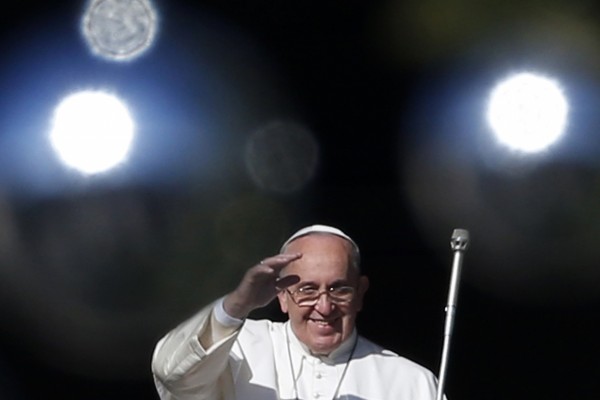
Philip Williams
It was Pope John Paul II former see in Krakow who honored us with a special mass for the discovery of Noah’s Ark!
Philip Williams
Happy to see that Cecil Robeck had a similar experience!