Click to join the conversation with over 500,000 Pentecostal believers and scholars
| PentecostalTheology.com
298
Book Reviews / Pneuma 31 (2009) 291-329
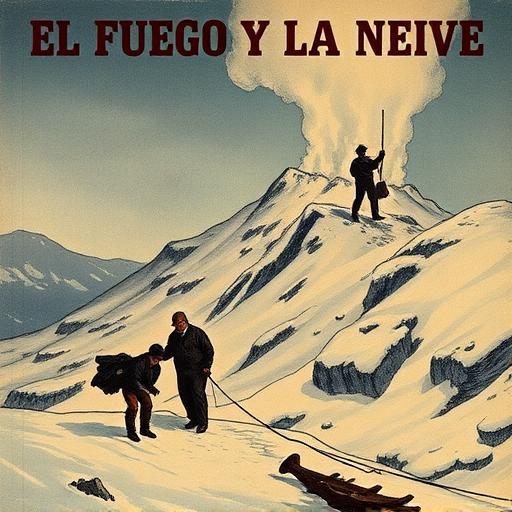
Luis Orellana U., El Fuego y la Nieve: Historia del Moviemiento Pentocastal en Chile, 1909- 1932 (Conceptión: Ediciones Centro Evangélico de Estudios Pentecostales, 2006). 163 pp.
In 1961 two Pentecostal churches joined the World Council of Churches from Chile. In 1999, thirteen of the churches of Chile, including three Pentecostal and the Catholic churches, signed an agreement on the mutual recognition of baptism. During the dictator- ship of Agusto Pinochet (1973-1990), the evangelical churches were divided; some sup- ported the dictator while others identified with the Catholic Archdiocesan Vicariate of Solidarity, resisting torture and state terrorism. How does one account for this contrast with other Pentecostal and evangelical churches?
This volume introduces the Pentecostal revival that broke out in Valparaiso in 1909. The author, himself a Pentecostal, uses Max Weber’s analytical sociological tools to trace this development. The Weberian conceptual tools are the typologies of rational, traditional, and charismatic forms of leadership, legitimation, and religion, and the process of routinization of charisma.
In the Chilean situation the Catholic tradition and authority structure of almost fi ve hundred years, which persisted until 1925, is characterized by its traditional place in society and reliance on a hegemonic role in culture and close association with the state, especially during the period covered in this history. Already in the late nineteenth and early twentieth centuries classical Protestant churches from North America and Europe represented the rational form of religion in Chilean society. It is within Methodism that the Pentecostal revival, spearheaded by Willis Hoover, emerges. The Pentecostal revival is analyzed here in the Weberian category of charismatic authority and religion.
In six chapters the author covers the first two decades of the movement, its relationship with society and culture, and its own internal tensions and structures. Following an intro- duction that lays out the Weberian categories and how they will be used, he provides chap- ters on the historical context, the development and expansion, the transition from a spontaneous to an institutionalized movement, and the historical and contextual dimen- sions of the consolidation of the movement. The fi nal chapter is an interpretive chapter on the early institutionalization of Pentecostalism. The author concludes that the Methodist Pentecostal Church, which accounted for a large majority of Pentecostals in 1932 when this story ends, developed structures and networks without losing the charismatic character of its leadership or the spontaneity of worship.
This early history helps explain how Pentecostalism has developed diff erently in Chile from other parts of the world and especially the United States. The classical Pentecostal churches from the United States are now widely dispersed in Chile but have developed from missionary ventures during the 1940s. All of this occurred well after this indigenous tradition had set its course, both as a Spirit-fi lled movement within Christianity and as a cluster of institutionalized churches serving the revival, but with social, political, and con- fessional priorities that diff ered from those of the newer imports.
Reviewed by Brother Jeff rey Gros, FSC
© Koninklijke Brill NV, Leiden, 2009 DOI: 10.1163/027209609X12470371388209
1