Click to join the conversation with over 500,000 Pentecostal believers and scholars
Bob Bosch | PentecostalTheology.com
How does interpreting a book lead to objective morality?
 Practical application of Pentecostal theology in politics, economy and social issues
How does interpreting a book lead to objective morality?

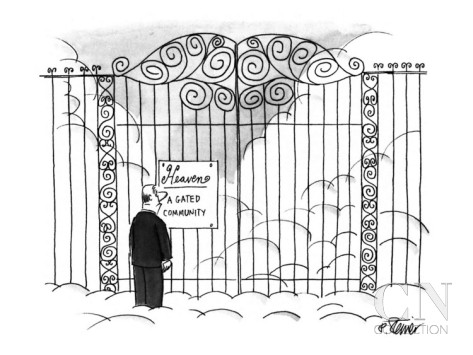
Standing at the gates of heaven At the end of the age when all the believers were standing in line waiting to get into…
Aaron B Lister
It doesn’t.
Larry Koester
Depends which book you are talking about. But would not the manufacturer ‘s owners manual be the most reliable information rather than some know it all down the street.
Anthony Rowden
It doesn’t. There could be objective moral values even if the book did not exist but God still existed.
Daniel Harrow
That’s a pretty complicated question. I would say in short that the testimony of the Spirit is just as important as the book. Kinda gotta have both to arrive at morality.
Enrique Moreno
It’s amazing, how did you arrive at asking this question ?
William Travis Dauchy
Interpreting a book, the Bible would lead to subjective morality. IE the morality you acquire would be subjective to the Bible.
Matthew Timothy Neal
Do you mean how does interpreting a book lead to knowledge of an objective morality?
William Travis Dauchy
Subjective; based on
Objective; not influenced by personal feelings or opinions in considering and representing facts.
Jesse Johnson
When a person truly believes on Jesus as their Saviour, God gives them the Holy Spirit who lives inside of them. It is the Spirit that causes us to understand the Bible’s truths. Without the Holy Spirit, we’re left to our own interpretation.
1 Corinthians 2:9-16 KJV
But as it is written, Eye hath not seen, nor ear heard, neither have entered into the heart of man, the things which God hath prepared for them that love him. [10] But God hath revealed them unto us by his Spirit: for the Spirit searcheth all things, yea, the deep things of God. [11] For what man knoweth the things of a man, save the spirit of man which is in him? even so the things of God knoweth no man, but the Spirit of God. [12] Now we have received, not the spirit of the world, but the spirit which is of God; that we might know the things that are freely given to us of God. [13] Which things also we speak, not in the words which man’s wisdom teacheth, but which the Holy Ghost teacheth; comparing spiritual things with spiritual. [14] But the natural man receiveth not the things of the Spirit of God: for they are foolishness unto him: neither can he know them, because they are spiritually discerned. [15] But he that is spiritual judgeth all things, yet he himself is judged of no man. [16] For who hath known the mind of the Lord, that he may instruct him? But we have the mind of Christ.
Richard Avirett
The book doesnt give people morals… it is written on your heart…
Billy Myers
Are you reffering to “Origin of Species”?
Rick Holtsclaw
Morality does not emanate from a Book but from the heart that has been infused with same from the moment of conception. Every man and woman, every child, has the moral law of God written upon their heart for two-primary reasons:
1) The protection and continuation of the species; a bulwark against self-destruction in narcissism, debauchery, lust.
2) So that Judgment in Eternity can manifest with equity in due process…mankind will be “without excuse.”
So then, even if the most remote aborigine never sees or hears a Scripture, they intuitively know that murdering their neighbor is wrong and they know that stealing their neighbor’s property is wrong.
It is the atheist that seeks to deny and refute the reality of God’s moral code etched upon our heart, but the atheist, in their nihilistic moral relativism, are also “without excuse” when they stand in the Judgment of the Condemned before the “second death” in Hell (Romans 1:18-32; Revelation 20:11-15).
David Popiden
How can morals be objective if they are based on the opinion/will/nature of anyone? If a thing is objectively true or moral it is no matter who agrees or says so rather than because anyone in particular says so.
Law Olivier
So you’re saying there are situations where it’s okay to torture an infant to death?
Cayton Mcdonald
Objective morality exists within us already BECAUSE of God
Jeremy Block
Depends on the authority of the book
Harold Goldman
Morality exist because god exists it’s not about a book. For objective morality must be outside of humanity or else it’s just public opinion
Andrew Forderhase
Objective morality is not derived from a book. It exists independently. But there is a book that can help us properly discern it and adhere to it.
Jimmy Dickerson
Interesting… A “book” doesn’t.. God does.. Nice strawman though.
Harold Goldman
Without an unchanging moral lawgiver exists there can be no unchanging morality
Jamie Bennett
Bob, do you always use equivocation in your statements?
Interpretation doesn’t lead to objective anything. Interpretation is the discovery process one uses to discover the objective truths that already exists. We do this in the hard sciences, in history, in cosmology, in literary criticism, in art, in reasoning and in natural revelation and in Scriptural revelation.
Do you have a clearer question you’d like to ask concerning any of those?
Billy Detzel
Interpretation does not. Believing what’s contained therein does. Belief, trust, faith… all these words are used interchangeably in the Bible. And there are indicative of someone who’s life—starting in their soul—has been changed. Transformed. That change is what enables a person to believe what’s contained in Scripture. The Bible already has objective morality in it. It’s been written primarily by the Holy Spirit. He is holy and pure and righteous and all together good. So when He says that doing one is good and another is bad people who’s lives He’s already regenerated will believe it. He’s not going to provide contradictory information.
Now some people in this group are going to take issue with stance I’ve taken. So I’ll just say this. I’m talking to Bob Bosch not you. ?
Richard Carson
This is not what any thinking Christian is arguing. You are confusing Ontology (the origin or source) with Epistemology (how we know something). Part of how we know Objective Morals is through the Bible, but it is not the only source. The Bible is not the origin of morality.