Click to join the conversation with over 500,000 Pentecostal believers and scholars
| PentecostalTheology.com
What does being created in God’s image mean to us? (Finis J. Dake)
 Practical application of Pentecostal theology in politics, economy and social issues
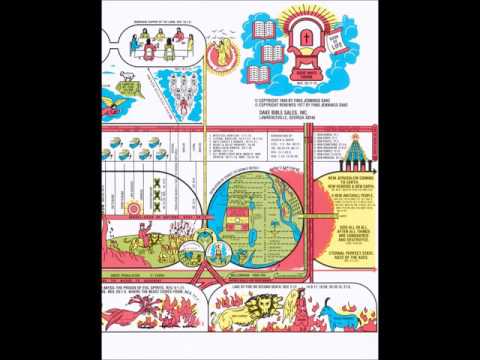
What does being created in God’s image mean to us? (Finis J. Dake)


Essay: Pentecostal Theology Paradigm of Salvation Bishop Timothy R. Carter, Ph.D (C) Provide a Pentecostal theological paradigm of salvation that bridges the Exodus event…
Louise Cummings
Means to me. We are like Him. But not in God Like He is. But a Spirit, Soul And Body.
Varnel Watson
Link Hudson I saw your quote about that somewhere referring the plural to the Council of God. This poor Hebrew grammar since just the following verse reverts to singular. So no go on this as a proof either
Link Hudson
Troy Day secular scholars tend to think the Torah was cobbled together so they can stay within that framework. They can say another part was editted or redacted. It does not make sense for evangelicals or traditional Christians though. Heiser studied at U Wisconson Madison
Varnel Watson
and at Bob Jones So no secular there
Louise Cummings
God made us from the dust of the earth. That’s one part. He breathed into man’s nostrils. And man became a living body. That’s two parts. He breath brings Spirit and Soul. The Spirit has been from the beginning like God. So has the Soul. You wouldn’t be living , had God had not breathed into you to become a living Soul that never dies. This dirt will go back to dust. But the soul goes back to God who gave it. Unless your not s Christian. Then it goes down. The soul of man never dies sheathed Christian or sinner. At Resurrection. Our spirit an soul goes back to the body. But flesh and blood at least will become a new body that will never die again. The Bible says we will be changed to a new body. Down in corruption. Raised in incorruptible body. The sinners will not rise at the Resurrection Of The Saints. Because I believe it’s in Revelation 20. That the rest of the dead lived not until the thousand years will end. The they will rise. And stand before the white throne of Judgement. Then the devil and the sinners will be cast into the lake of fire. Which is never an end. The Christians will have a new Heaven and New earth. Wherein dwells Righteousness. New Jerusalem will com down from God out of Heaven.
Varnel Watson
like I was trying to explain to Link Hudson the plural in the said verse reverts back to singular – a very specific singular in Hebrew grammar SO any claims of Trinity or Council of God reference is left with NO Biblical proof from the phrase -let us- alone
Link Hudson
Troy Day so you would say you cannot use a singular for the Trinity? I was not endorsing Heisers comment btw.
Link Hudson
I did not endorse the idea that ‘Let us make man in our own image’ was directed to the heavenly council. Secular/liberal scholarship does not have the same concept of ‘proving from scripture’ that evangelicals and Christians throughout hustory have had.
I am not sure if there is a clear set of grammar rules for references to the trinity.
Varnel Watson
Dont know about you but Heiser is netierh Secular nor liberal scholarship
Link Hudson
Troy Day I kind of classified him in my mind as an evangelical who had a secular/liberal style Old Testament scholarship education. Accepting the idea that ‘let Us make man in Our image’ seems a non-evangelical interpretation to me.
Varnel Watson
with Bob Jones education? – naah
Link Hudson
I heard him mention it in a video lecture. I tried to find it.
There is just this teaser: https://www.facebook.com/MichaelSHeiser/videos/let-us-create-man-in-our-image/1012113405517533/
This link is attributed to Heiser on a Google search, but it’s just a doc without much information on where it come from in the body of it. http://www.michaelsheiser.com/TheNakedBible/Chapter%203.doc
I heard the ‘let Us make man’ divine council interpretation from a OT scholar who’d studied at Harvard at UGA in the religion department in the early 1990’s.
Varnel Watson
he graduated from Bob Jones – not liberal IF his new theories on the godhead are liberal, what business do you have defending them? BTW you should consult on the 2 YHWHs with Ricky Grimsley who claimed to have watched hours of Heiser lectures and never not once heard that – obviously very much a big part of what Heiser has been teaching for years now Back to DAKE’s angelic order now?