Does Exodus 22:2 Justify Armed Self-Defense?
Does Exodus 22:2 Justify Armed Self-Defense? Curtis Fenison [01/15/2016 9:50 PM] Really? Luk_22:36 Then said he unto them, But now, he that hath a…
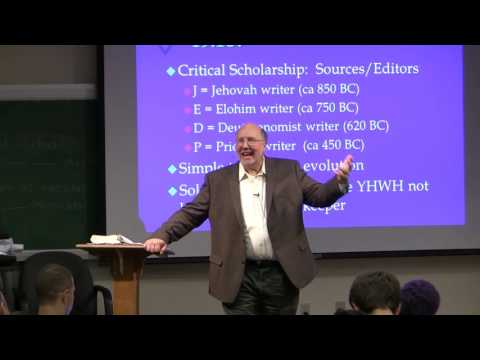
Biblical eLearning (http://biblicalelearning.org) presents: Dr. Ted Hildebrandt on OT Literature Ted has a doctorate from Grace Theological seminary where he taught twenty years before…
In Exodus 3:18 Moses is commanded to gather the Israelite elders, go to Phara0h and say “יְהוָ֞ה אֱלֹהֵ֤י הָֽעִבְרִיִּים֙ נִקְרָ֣ה עָלֵ֔ינוּ וְעַתָּ֗ה נֵֽלֲכָה־נָּ֞א דֶּ֣רֶךְ שְׁלֹ֤שֶׁת יָמִים֙ בַּמִּדְבָּ֔ר וְנִזְבְּחָ֖ה לַֽיהוָ֥ה אֱלֹהֵֽינוּ” “The Lord, the God of the Hebrews appeared to us and now please let us go a journey of three days into the wilderness and we will slaughter to the Lord, our God.”
But in Exodus 5:1, Moses changes the words when talking to Pharaoh and says “כֹּֽה־אָמַ֤ר יְהוָה֙ אֱלֹהֵ֣י יִשְׂרָאֵ֔ל שַׁלַּח֙ אֶת־עַמִּ֔י וְיָחֹ֥גּוּ לִ֖י בַּמִּדְבָּֽר” “So said the Lord, God of Israel, ‘send out my nation and they will celebrate to me in the wilderness.'” Pharoah responds (Exodus 5:2) by claiming ignorance of the Lord, saying “מִ֤י יְהוָה֙ אֲשֶׁ֣ר אֶשְׁמַ֣ע בְּקֹל֔וֹ לְשַׁלַּ֖ח אֶת־יִשְׂרָאֵ֑ל לֹ֤א יָדַ֙עְתִּי֙ אֶת־יְהוָ֔ה וְגַ֥ם אֶת־יִשְׂרָאֵ֖ל לֹ֥א אֲשַׁלֵּֽחַ” “who is the Lord that I should listen to his voice to send out Israel; I don’t know the Lord and also Israel I will not send out.”
In the very next verse however, Moses reverts back to the message that God had told him to use and says “אֱלֹהֵ֥י הָעִבְרִ֖ים נִקְרָ֣א עָלֵ֑ינוּ נֵ֣לֲכָה נָּ֡א דֶּרֶךְ֩ שְׁלֹ֨שֶׁת יָמִ֜ים בַּמִּדְבָּ֗ר וְנִזְבְּחָה֙ לַֽיהוָ֣ה אֱלֹהֵ֔ינוּ” “the God of the Hebrews appeared to us and now please let us go a journey of three days into the wilderness and we will slaughter to the Lord, our God.” This time Pharaoh doesn’t deny any knowledge of God but instead accuses Moses and Aaron of distracting the Israelites from their task and being lazy.
The simple reading of the text implies that Pharaoh did not know who the God of the Israelites was but did know who the God of the Hebrews was. And unlike the God of the Israelites, Pharaoh had at least some level of respect for the God of the Hebrews.
Is is possible that Pharaoh did not know that the God of the Israelites was the same as the God of the Hebrews? Is this evidence that the term Israelite and Hebrew were not viewed are referencing the same people (i.e. that Israelites were a subset of Hebrews)?
And if there was a really a difference between the terms, why did Moses change God’s message?
I have a question. I ran across something this morning that “seems” like a discrepancy in the Bible. I don’t know why I never…
Biblical eLearning (http://biblicalelearning.org) presents: Dr. Ted Hildebrandt on OT Literature Ted has a doctorate from Grace Theological seminary where he taught twenty years before…
I recently sat in a lecture “Why Are Youth Leaving the Church?” I listened to the most recent statistics, compared one opinion to the…
If you want to start at the beginning with an introduction to Israelite Creation in Context, click HEREThere are a wide variety of articles you can find about Creation, Exodus, Plagues, and Numbers HEREA short collection are as follows:https:/…
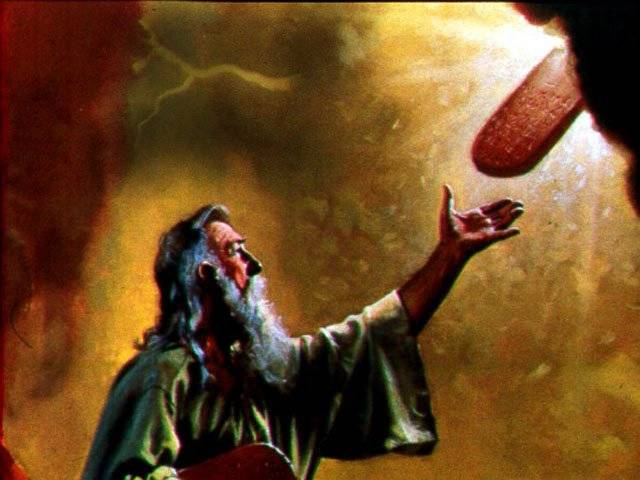
The wikipedia page, and most other depictions of the tablets are that they are of the ten commandments. When I read Exodus, it seems at least to me a little less clear as to what exactly was written, i.e. they have the law and the commandment.
(Ex. 24:12) Now the LORD said to Moses, “Come up to Me on the mountain and remain there, and I will give you the stone tablets with the law and the commandment which I have written for their instruction.”
(Ex. 31:18) When He had finished speaking with him upon Mount Sinai, He gave Moses the two tablets of the testimony, tablets of stone, written by the finger of God.
Which makes it seem to me that perhaps not just Exodus 19:1–9 was on the tablets, but perhaps all the “laws”, i.e. 20:1-17 and maybe even 20:22–23:33 were written on the tablets.
So my question is what was written on the tablets? Is there evidence that makes it clear what exactly was written on the tablets? (i.e. internal evidence within Exodus or the Torah, the hebrew language, etc..)
There does appear to be at least some Jewish schools of thought that believe this verse implies more than just the ten commandments were on the tablets:
Teachings and commandments. הַתּוֹרָה וְהַמִּצְוָה (ha-Torah v’ha-mitzvah). The expression seems too large for the Decalogue, hence Rashi explains that God’s inscription on the tablets comprised all 613 mitzvot of tradition. The 19th-century scholar Meir Lev ben Yechiel Michael (Malbim) took this phrase as the title of his popular Torah commentary. [Torah][1]
There does also appear to be some debate that weight of stone would limit the size, and hence the number of words that could fit on a tablet.
[1]: Torah: a modern commentary

Exodus 30:17-21 (KJV)
17 And the LORD spake unto Moses, saying, 18 Thou shalt also make a laver of brass, and his foot also of brass, to wash withal: and thou shalt put it between the tabernacle of the congregation and t…
Psalms 106:19 (NKJV)
19 They made a calf in Horeb, And worshiped the molded image.
Exodus 18:31 (NKJV)
18 And when He had made an end of speaking with him on Mount Sinai, He gave Moses two tablets of the Testim…
Jewish Division, 1. Law (Torah) – Pentateuch, Genesis, Exodus, Leviticus, Numbers & Deuteronomy. http://andnowyouknowmore.blogspot.com 2. Prophets (Nebhiim), A. Former Prophets. Joshua, Judges, Samuel &…
Ed Lane [02/25/2015 10:07 AM]YES Glenda Loftis [02/26/2015 3:23 AM]Glenda Loftis liked this on Facebook. Ginger Thornsberry Brockman [02/26/2015 3:23 AM]Ginger Thornsberry Brockman liked…