Click to join the conversation with over 500,000 Pentecostal believers and scholars
| PentecostalTheology.com
530
book reviews
Nimi Wariboko and Amos Yong (eds.)
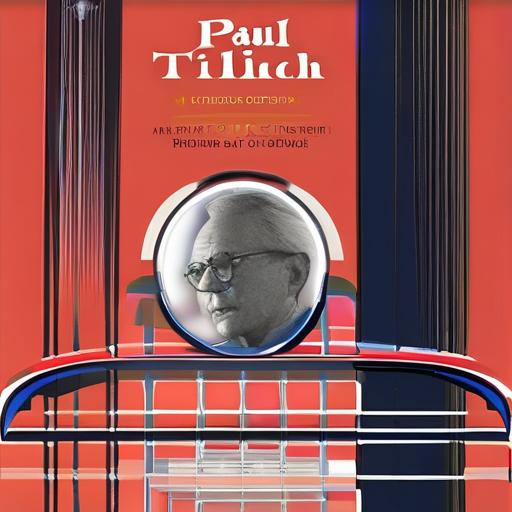
Paul Tillich and Pentecostal Theology: Spiritual Presence & Spiritual Power.
Bloomington,in: Indiana University Press, 2015. Paperback.isbn9780253018083.
“With full justification it can be said that if any term faithfully and succinctly describes the pentecostal experience of the Spirit, it ispower.With equal justifi- cation it can be said—and is routinely noted—that for Tillich the correspond- ing expression is (spiritual) presence” (p. 19). Nimi Wariboko and Amos Yong took up a daunting task, to explore the oft-enigmatic works and metaphorical language of Paul Tillich and their correlation to pentecostal thought and think- ing.The editors seek to accomplish this dialogue by providing the philosophical framework of Tillich’s theology, followed by more specific doctrinal conversa- tions later in the book.
While each chapter is helpful in creating further dialogue within their respective topics, topics including ontology, eschatology, Christology, soteriol- ogy, political theology, a theology of religions and more, some chapters stand out as particularly helpful in preparing the framework of conversation between Tillich and pentecostals as well as moving the conversation into more unex- plored territories. Wolfgang Vondey’s chapter on “Spirit and Nature” and the discussion of Tillich’sphilosophical underpinning owingitself, at least partially, to Schelling and Schleiermacher provides a needed discussion on pneumato- logical ontology. This philosophical theological discussion finds its expressions within a theology of the demonic. This sets the stage for the reader who will find two chapters later in this work on pentecostal theologies of the demonic.
A chapter offered by Lisa Stephenson on Tillich’s “sacramental spirituality” provides a unique perspective on Tillich’s oft overtly philosophical theology as it relates to a pentecostal feminist theology. Stephenson creates a unique take on the individual experience with the Spiritual Presence and the needed com- munal expression of those individual experiences as a way for all to encounter the Spiritual Presence. While there is a pneumatological permeation through- out each chapter of this work as a key component for discussion, some writers do well in focusing their discussions through specific issues as they relate to current topics in the church and society.
Finally, this book highlights the fact that the discussion between pente- costals and Tillich is not American-centric, evidenced by the presence of chap- ters devoted to interlocution of Tillich and pentecostals abroad in places such as Africa, Germany and Canada.
In my opinion, there is no real place of solid critique to be given for this book. Methodologically and theologically, this work is both groundbreaking and instrumental for furthering pentecostal theology. The only real problem
© koninklijke brill nv, leiden, 2016 | doi: 10.1163/15700747-03804015
1
book reviews
531
here is that such a short work cannot contain the breadth and depth of the con- versation with Tillich needed to explore how fruitful the dialogue can possibly be. For instance, there is no explicit and detailed conversation with Tillich on his ecclesiology and the Spirit’s interaction with the Church as they are called out as prophetic communities. I cannot help but to think that in order to till new grounds of exploration between Tillich and pentecostal theology, that a fruitful conversation was missed in the attempt to not sequester the Spirit to ecclesiology, as was noted as a common trait for discussions on Tillich’s eccle- siology (p. 18). However, given Tillich’s penchant to see the “Spiritual Commu- nity” as a prophetic community, and in light of the pneumatological bridges created within the chapters of this book, pentecostals have even more to look forward to through this dialogue as both a way to bolster pentecostal theology, and also provide greater inroads with protestant theology that has been greatly informed by the works of Tillich. In order to do this, however, pentecostals are in need to create their own robust ecclesiology, both historically and theolog- ically as pentecostals “have yet to develop a genuine Pentecostal ecclesiology” (p. 39).
As such, this work is quite valuable in, yet again, finding new avenues for ecu- menicaldialogue betweenpentecostalsandour Protestantsistersandbrothers. The crux of this theological ecumenism is seen by the responses given at the end of the book, one by a Mark Lewis Taylor, a pentecostal Tillichian scholar and the other by John J. Thatamanil a Tillichian scholar who teaches at Union Theological Seminary, which was Tillich’s academic home for many years.
Aaron Gabriel Ross
University of Birmingham, Birmingham,uk
PNEUMA 38 (2016) 503–531
2