Click to join the conversation with over 500,000 Pentecostal believers and scholars
| PentecostalTheology.com




 Practical application of Pentecostal theology in politics, economy and social issues

Why did William Seymour really leave Methodism that led him to Christ? Robert Rogers [08/24/2015 7:09 PM] The title is somewhat misleading. To reject…
Link Hudson
I am wondering if they took all cases in which God did unpleasant stuff from a human perspective–like drown the Egyptians and redact it to say God allowed those things to happen. That was something about Hagin’s teachings that never made sense to me and I was suprised his fans and stidents could not all instantly see the problem with it.
Varnel Watson
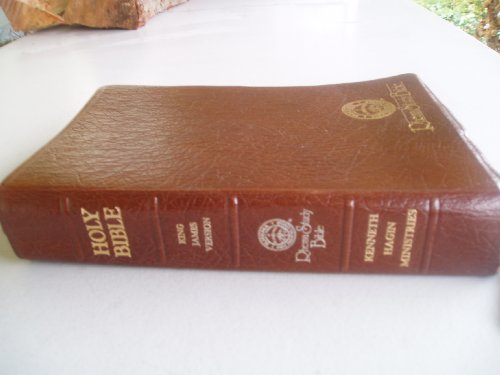
Good catch Link Hudson IF you open the article and actually read it you will see 2 sets of Bibles – one is KH legacy and one Rhema after RBS. Now while KH theology did not change that much during his ministry Rhema BS and the actual Bible have had a lot of theological contributors from RHB, ORU and the whole Tulsa bunch
There was a good discussion in the group about those influences between Dan Irving, Esq. and Mr. Bible Also Dr. Paul L. King I believe, wrote on the contribution of the Faith Movement in this group as well
But my main question is this:
Who is he to produce a study Bible?
What has been his contribution to Pentecostal theology
What are his theological subject discoveries that no one else has seen to be inserted and bound in a single Study Bible volume?
Russell A. Morris
The KH Legacy Bible lists for $149. Quite expensive, almost double the price of most study Bibles I’ve seen in book stores. The cost shouldn’t be a problem for the WOF proponents, they can simply speak it into existence.
Varnel Watson
Russell it only comes with genuine leather though – I have not seen it just paperback Perry Stone’s NT alone lists for $120 so seems like Study Bibles are way up The new Dake print is too – I hate they changed its design after all these years for the lack of proper page setting software It took away the ease of using it
A.J. Bible
$149 isn’t bad at all for a Bible that’s, Oxford print with genuine leather
Russell A. Morris
AJ, the genuine leather does indeed increase the cost, I usually buy the hard cover study/reference Bibles because they’re kept in a bookcase for reference. And the Oxford print is very nice as well. It’s what is printed on the pages between the leather cover that is somewhat problematic. BTW, I like your last name.
Varnel Watson
YES Oxford print with genuine leather. Dont think KH bible has a hard cover edition Neither does Dake At least not since the 60s NT only editions. Also, the new format is really hard to follow as Dake never intended his notes to be presented in such a weird way #BadSolution
Varnel Watson
Apart from the price my main question is this:
Who is he to produce a study Bible?
What has been his contribution to Pentecostal theology
What are his theological subject discoveries that no one else has seen to be inserted and bound in a single Study Bible volume?
A.J. Bible
Rather who is he not to produce one? He already did produce this study Bible, which, it sounds like I’m the only one who actually has one and has seen the inside. LOL. The onus is actually on you to say why he shouldn’t have made a study Bible, because he already has done so.
Varnel Watson
No AJ The Rhema Bible was compiled by the Tulsa bunch and is not his personal authorship – has many contributors in it. This current legacy Bible on the other hand was produced after KH died It was done perhaps by his ministry which paid a ghost writer company to compile it.
Have you even seen and used the KH legacy Bible yet? Hence the questions promptly asked I wish Dr. Paul L. King had to time to step into this discussion and shed some light on the actual historical and theological contributions in it. Dan Irving already shows quite a bit in his posts on the theology behind it.
Paul L. King
Troy Day Not sure I can be of much help on this. I have not seen the Bible, but I do expect that several have contributed to it. Hagin’s last book The Midas Touch was for the most part ghost-written, so I suspect that plays a large part in this volume. Hagin did change some of his views over the years (as he mentioned in The Midas Touch), so I expect some of the questionable theology has been cleaned up and modified.
Varnel Watson
Yes on the Midas Touch I believe Wagners last book on money was also in the same range – ghost written and purposing to provide ongoing finances to his legacy projects and family of course But now, who was it that wrote extensively on the positive side of the Faith movement and well counter posted the “Other Gospel” book proving it was written backing another agenda? I believe it was Jon Ruthven {maybe} http://www.pentecostaltheology.com/does-word-of-faith-have-a-semi-gnostic-dualism/
Jon Ruthven
Yes, whoever posted my article wrote the title as Carl Barth . . . with a “C” (sigh). I’m not sure from the post above if my article is being mischaracterized. The reader of the above post may want to read my article just to be sure of my heresy.
Varnel Watson
Which of the 3 articles are we discussing per OP? Jon Ruthven Paul L. King
“Hermeneutics in Modern and Classic Faith Movements” by Paul L. King
What differences in interpretation can we see between the contemporary Word of Faith movement and the classic Faith movement?
“What’s Right About the Faith Movement” by Jon Ruthven. Ministries Today (Jan-Feb 1999, Vol 17 No 1), pp. 56-60.
“Claiming God’s Promises Today: Classic and Modern Word of Faith Views Compared and Contrasted” by Paul L. King
What differences are there between the contemporary and classic faith movements about how we should trust God to fulfil His promises?