
Click to join the conversation with over 500,000 Pentecostal believers and scholars
| PentecostalTheology.com
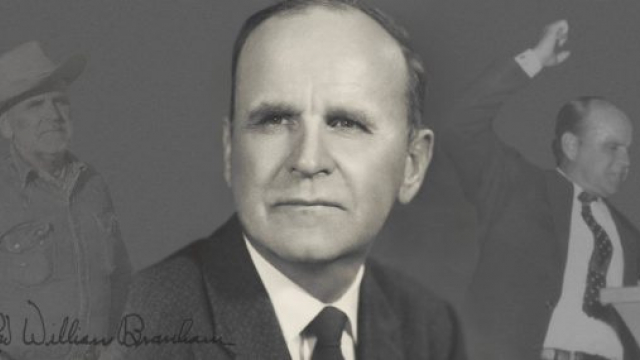
The theological framework of William Branham, a prominent figure in 20th-century religious movements, exhibited a significant divergence from classical Christian orthodoxy, particularly concerning the doctrine of the Trinity. Central to this distinction was his adoption of the “Jesus Name” formula for baptism, a practice emblematic of Oneness Pentecostalism. This specific baptismal mode, which invokes only the name of Jesus rather than the traditional Trinitarian formula of Father, Son, and Holy Spirit, served as a foundational indicator of his heterodox position on God’s nature.
Fundamentally, Branham explicitly rejected the traditional Christian understanding of the Trinity as three co-equal persons in one Godhead. This repudiation was not merely a subtle theological nuance but a core tenet that profoundly shaped his teachings and the subsequent theological identity of his followers. Consequently, the movement associated with him, often termed Branhamism, largely adopted a strict Oneness or “Jesus Only” theology. This theological perspective typically asserts that there is only one divine person, Jesus Christ, who manifests himself in different modes or roles (Father, Son, Holy Spirit) rather than existing as distinct persons.
Notwithstanding the pronounced Oneness inclinations evident in his baptismal practice and frequent polemics against the Trinitarian doctrine, Branham’s personal declarations sometimes presented a more complex and seemingly contradictory picture. He occasionally disavowed strict adherence to “Oneness” or “Modalist” labels, and at times spoke of a distinction between the Father and the Son. This presented a significant theological tension: while his rhetoric could suggest a departure from strict Modalism, his consistent use of Oneness arguments in his preaching and his unwavering commitment to the “Jesus Name” baptism remained defining characteristics of his ministry.
Therefore, despite Branham’s occasional attempts to distance himself from precise theological labels, his practical theology and the interpretive framework he bequeathed to his movement ultimately positioned Branhamism firmly within the sphere of Oneness thought. The embrace of the “Jesus Name” formula, coupled with a consistent rejection of the Trinitarian doctrine and the pervasive use of Oneness arguments, established a distinct theological identity for his followers. This identity, characterized by its departure from mainstream Trinitarian orthodoxy, continues to define the legacy of William Branham and his enduring influence.


PentecostalTheology .com
not that any of our @@followers would really KNOW this
Troy Day
not that any of our @@followers would really KNOW this