Click to join the conversation with over 500,000 Pentecostal believers and scholars
| PentecostalTheology.com
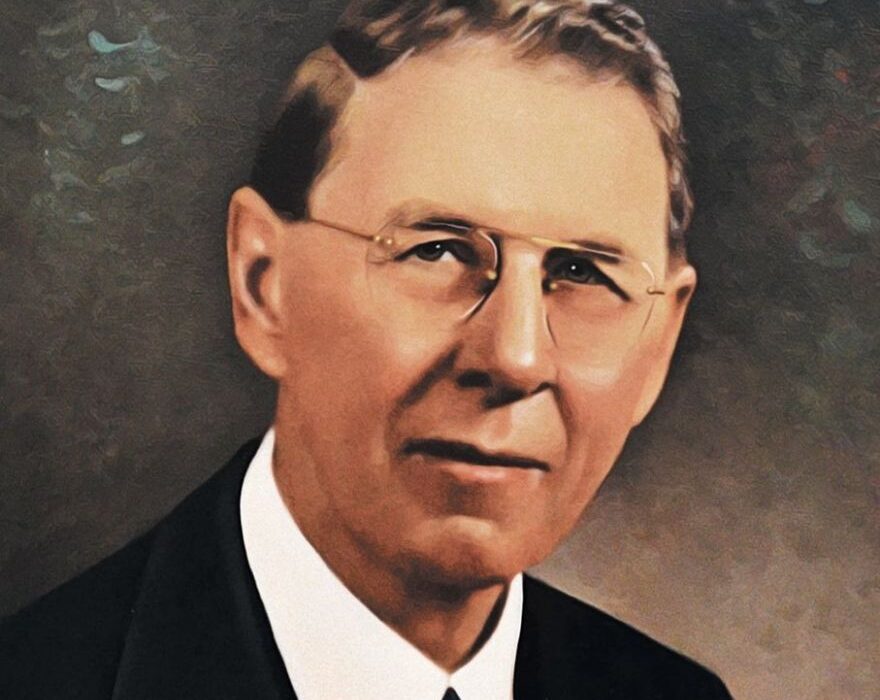
159 Bishop J. H. King and the Emergence of Holiness Pentecostalism David A. Alexander* I. The Transition to Pentecostal Holiness Joseph Hillery King was born August 11, 1869 in Rockmill Township, Anderson County, South Carolina. His father, a sharecropper, was poor and uneducated. The family often lived in hovels, with every member working hard from an early age. Due in part to the heavy workload on the farm, and also due to the scarcity of pastors in this rural area, the King family did not attend church regularly. It did, however, occasionally attend a Baptist meeting, and later King would report that his family once attended a Holiness Convention, due largely to its proximity to the King home. Toward the beginning of 1883, when Joseph was thirteen, the King family moved to Franklin County, Georgia. There he came under the influence of a Reverend W. O. Butler who was a minister of the Methodist Episcopal Church, South. He was sanctified, or as he put it, “in the experience of sanctification,” and he preached the doctrine over the Carnesville Circuit. It was during this time that King first heard of the doctrine of sanctification. I On August 11, 1885, the Reverend William Asbury Dodge conducted a campmeeting near King’s home. Dodge was the Vice- President of the Holiness Association of the North Georgia Conference. The sermon was a powerful call to salvation, and King was among those seeking at the altar. “Thousands have had a brighter conversion than I,” wrote king, “but I had enough to put me in the way of obedience to God.”King referred to this salvation experience as his double birthday since it was his sixteenth. He joined the Methodist Episcopal Church (South) on August 17, 1885.2 A Holiness convention was conducted in this area from October 20-25, 1885 by the Reverend A. J. Jarrell who was President of the Holiness Association of the North Georgia conference. William Dodge was also present at the convention. On Friday, October 23 a consecration service was held at 8:00 a.m. for those who were seeking sanctification. Speaking at this service was B. Weed Gorham, of Iowa.3 The vivid detail in King’s re-telling of the story of his sanctifi- cation throughout his life, demonstrates its importance to him, and the place it held in his life and theology. . ‘ . , . 1 160 The church was filled with the power and glory of God. Some began to rise and shout the high praises of God, while others laughed, cried, and gave glory to God. A marvelous change was wrought in me. I found my heart was filled with light, love, and glory… I was, as it were, in Heaven. Peace unutterable filled my inner being. How could an angel feel any happier than I did in those moments!4 This experience, however important to King, was not to be final for him. This experience of entire sanctification was the beginning of a long and tortuous spiritual journey which would take him through the experience of “fire-baptism” and then to “Spirit- baptism.” Though King was prone to doubt the finality of the sanctification experience, he later came to interpret these bouts of doubt and depression as a natural desire for Spirit-baptism. He also believed that he was finally sanctified, once and for all, in the experience which he then called, fire-baptism. It was this desire for a spiritually’fulfilling experience that eventually led him to the experience of Spirit-baptism. It was his interpretation of this experience that led him to accept and articulate the theology known as “pentecostal holiness.”5 In November of 1885, the Reverend A. J. Hughes was appointed to serve as the pastor of the Carnesville Circuit. He was not a holiness preacher, nor did he believe in the “second blessing, or sanctification as an experience received subsequent to regener- ation.” The Reverend J. H. Baxter was appointed Presiding Elder of the district. He, too, opposed the doctrine of holiness. These men taught that there was only one experience of grace. Baxter had even written a pamphlet denouncing scriptural sanctification. “Soon the revival fires died on the charge, and all that professed sanctifi- cation, save one or two, renounced the doctrine and lost the experience that they had received.” King perceived a determination to stamp the doctrine out of existence in the North Georgia Conference of the Methodist Episcopal Church, (South). The holiness ranks were definitely thinned out, and this opposition pained young King greatly.6 At the Quarterly Conference of the district in May of 1887, King applied for an Exhorter’s License. He was turned down. Because he was otherwise qualified to receive this License, King always felt that his rejection was based on his strong commitment to holiness theology.7 King continued to preach in spite of this setback, and was eventually licensed by the Methodist Episcopal Church (South) in Augusta, Georgia during the Fall of 1890. In February, 1891 King travelled to Atlanta, Georgia. There he had an encouraging encounter with the Marietta Street Methodist. _ 2 Episcopal Church encouragement dramatically. at the age immediately 161 with them. With their (North) and united and help the scope of King’s ministry increased In March, 1891 he was licensed to preach and in May of twenty one, he became a junior Pastor. King began to prepare for the courses of study which would enable him to advance to full connection. By January, 1894 King had passed the second year examinations, and he was admitted to full connection with the Annual Conference.8 Tennessee, King enrolled 1896. King Church, (North) Conference, Circuit. On May University, completing take charge twenty eight years Later that year King in Chattanooga, the Freedman’s Aid Society. in January, 1895.9 , Secretary of the became familiar- with U. S. Grant University which was operated by in the School of Theology The Annual Conference was held in Atlanta, Georgia in January, finished the courses of study prescribed by the Methodist Episcopal and received his Elder’s orders. He was ordained by Bishops R. S. Foster and W. F. Mallelieu and was appointed to the Lookout Mountain Circuit, ‘ so that he could ‘ continue his schooling in Chattanooga. In January, 1897, King was elected Assistant and he was again appointed to the Lookout Mountain 11 of that same year, he graduated from the the entire three year course of study. 10 When King left the Annual Conference in December, 1897 to of the Simpson Circuit in Northeastern Georgia, he was old. He was a graduate of the School of Theology and a fully ordained minister of the Methodist Episcopal Church. He was Assistant Secretary of his Conference and a member of the He had been saved and in the experience of for over twelve years. He had already served as a pastor for seven years. He was theologically committed to the doctrine and experience of entire sanctification. arrival at his new charge in December, 1897, had been conducted by holiness preachers, “and almost all of the membership professed – to be in the experience of sanctification.” In addition to the doctrine of sanctification some- – Examining sanctification Committee. Prior to King’s meetings thing else was being taught. . … they had been taught that the baptism of the Holy Ghost and fire was received by faith after the grace of sanctifi- cation had been imparted. As a result everyone that testified declared that they had been definitely baptized with the Holy Ghost and fire subsequent to sanctification. ? ? I This doctrine reflected the teaching of Benjamin Hardin Irwin, of Lincoln, Nebraska. King described the doctrine as being very new and strange, since he had never heard, nor read anything about it before. He 3 162 denounced the doctrine as unsound, and one of religious extrava- gance. “I thought that I would never profess any experience beyond that of sanctification. “12 In January, 1898, King attended a meeting held at Pennington’s Chapel outside of Royston, Georgia. This meeting was conducted by men of the Wesleyan Methodist Church who espoused the doctrine of “fire-baptism.”J. H. King was deeply moved by what he saw and experienced at these meetings. Afterwards he professed to have received the experience of “fire-baptism.1113 King is vague on what exactly occurred in the Pennington Chapel meetings. It is obvious that they affected him profoundly. He also does not describe his experience of fire-baptism in the same explicit terms as he did his previous experience of sanctification. He was evidently influenced enough by this experience to surrender his charge, and thus, effectively resign from the Methodist Episcopal Church (North). This he did, on May 1, 1898, at the Quarterly Conference. He records the fact that many members were “struck dumb At this time, Irwin decided to consolidate his many state associations into a single denomination. His first national convention was held in Anderson, South Carolina, from July 28 to August 8, 1898. King attended this meeting with many others, and there he united with the newly formed Fire-Baptized Holiness Church. King’s attitude toward the doctrine of fire-baptism is as strange as his previous attitude toward the experience itself. Later, he obviously developed some reservations both about the doctrine and the experience, and ultimately he rejected it. He also influenced the Fire-Baptized Holiness Church to do the same. As such, it is especially unfortunate that he did not discuss the doctrine or experience in more explicit terms. 15 King, however, did not totally discount this experience called fire-baptism which he received in connection with the Pennington He came to his as the ” Chapel meetings. interpret “fire-baptism” experience of sanctification. From that time on, King did not doubt that he was entirely sanctified, once and for all, at Pennington Chapel. He held to this conviction to the end of his life.'” King attended the General Convention of the Fire-Baptized Holiness Church in March, 1899 at Royston, Georgia. He had spent most of the last year preaching fire-baptism in various meetings. After leaving Royston, he traveled to his new pastorate in Toronto, Canada. One year later in March, 1900, King received a letter from Benjamin Harden Irwin himself asking King to come to Lincoln, Nebraska and to ” be the Assistant Editor of the Church’s paper, Live Coals of Fire. , . . 4 . Lincoln is as ambiguous 163 on his relation- Though Irwin was the editor of the paper, he was away from most of this time. King did not elaborate ship with Irwin, or the reasons why Irwin called him to Lincoln. He in describing his relationship with Irwin, as he was in describing the doctrine and experience of fire-baptism itself.” In June, 1900, word was flashed throughout the Fire-Baptized Holiness Church that Irwin had fallen into sin. A General was unanimously throughout medium also to spread understood it Fire-Baptized Canada, as being, special services in Ontario, ‘ knowledge. Argue people. “They ‘ Convention was called by King, at Olmitz, Iowa, for July 1, 1900, in order to elect a new General Overseer. On July 2, 1900, J. H. King elected to this post. He was thirty years old. King worked tirelessly for the next few years, traveling and preaching the United States and Canada. His purpose was to heal the wounds of Irwin’s fall, and consolidate the Church’s functions. He became the editor of the Church’s paper, and he used this the doctrine of the “Spirit-baptism” as he at that time. During his tenure, King influenced the Holiness Church to denounce fire-baptism as an experience subsequent to sanctification. 18 In September 1906, King conducted for the Reverend Goff. King described this man’s doctrine “in perfect harmony with that of the Fire-Baptized Holiness Church.” On the trip home, King traveled with a friend, the Reverend A. H. Argue. Argue told King about the new revival which was in progress in California, which King had no prior referred to the group as “Apostolic Faith” are seeking and obtaining the baptism of the Holy Ghost with speaking with other tongues as on the day of Pente- One of Argue left a copy of a paper with King which described the beliefs of this new group. King read the paper carefully, several days later. of the was that the of the . things they taught baptism Holy Ghost was received subsequent to sanctification. This , ‘ was what I had believed and taught for a number of years, . and had come to be thoroughly . convinced that it was scriptural.zo enabled Church, teachings searching Holiness Church had Episcopal him theologically to accept the movement. He was , King realized that the Fire-Baptized him to separate from his beloved Methodist and that it had prepared and experience of the new Pentecostal for a satisfying experience beyond entire sanctification which would be complete and final. At first, he thought that he had found such an experience in the so-called “fire-baptism.” Though had renounced the doctrine of a subsequent fire-baptism, he the idea of a Spirit-baptism subsequent to sanctification.21 King was still open to 5 164 The man responsible for the promulgation of this new doctrine in the Southeastern region was a minister of the Holiness Church of North Carolina, the Reverend Gaston Barnabas Cashwell. Cash- well had departed from Dunn, North Carolina in November, 1906, traveling by rail enroute to Los Angeles, California. He intended to investigate the revival at the Azusa Street Mission for himself. While in Los Angeles, Cashwell sought for, and received this new experience of a Spirit-baptism at which he spoke in tongues. Cashwell returned to North Carolina immediately, and began a meeting in Dunn, December 31, 1906. This revival continued through January, 1907 and heavily influenced the members and ‘ ministers of the Fire-Baptized Holiness Church and the Holiness Church of North Carolina. Among those present at the Dunn meeting were members of the congregation in Toccoa, Georgia where King was technically serving as interim pastor. It was upon his return from Canada that these folks encountered King with a new message.22 Cashwell arrived in Toccoa in mid-February of 1907, to conduct meetings along the lines of the new doctrine. King took this opportunity to oppose the new doctrine both publically and privately. The point that pained King about the new doctrine was the insistence on the necessity of speaking in tongues as the exclusive evidence for the Spirit-baptism. King felt that he had bested the new doctrine at each confrontation.23 From what King has written, he is not explicit as to why he allowed Cashwell to use his church building in the first place. It is likely that he did not want to alienate the growing faction of people and ministers who had embraced this new doctrine and experience completely. King may have felt that he could coerce them into modifying their insistence on the evidence of tongues as the . ‘ exclusive sign of the Spirit-baptism. It is also possible that King allowed Cashwell to come to Toccoa, because of his own subconscious desire to be confronted by the new doctrine and experience. King had already shown a proclivity toward being in the right place to encounter new doctrines and experiences. He had rushed to a special consecration service at age sixteen where he first experienced entire sanctification. Later he appeared at the Pennington Chapel meetings and eventually embraced the doctrine and experience of fire-baptism. He had already determined that there was an experience of Spirit-baptism subsequent to sanctification. Though King was opposed to the doctrine of tongues, he was certainly open to an experience of Spirit-baptism. Now he was face to face with a “Pentecostal” recently from Azusa Street.24 . 6 165 It would be a gross misunderstanding, however, to interpret King as someone who shallowly followed after new religious experiences. King seems simply to have had an instinctive hunger for a profound experience with God which would satisfy him spiritually and permanently. King found such an experience in entire sanctifi- cation and then in the subsequent Spirit-baptism with the evidence of tongues. These religious experiences of entire sanctification and Spirit-baptism were not fleeting. Indeed this final transition of doctrine and experience defined King’s life and ministry for four . decades. His opposition to this new doctrine and experience and Spirit- baptism were not restricted to his personal confrontations with Cashwell and others in Toccoa, Georgia. King published an article in the official paper of the Fire-Baptized Holiness Church, Live . Coals. The article was written by J. Hudson Ballard and covered fully a quarter of the issue. It is a clear and cogent refutation of the tongues doctrine based upon scriptural arguments.25 King had committed himself to altering the new movement’s . on the exclusive evidence of ” position tongues. He had also committed himself to do this through scriptural arguments. On February 14, 1907 King secluded himself in order to study and prepare his position further. It is likely that he wanted to be even more exact in his exposition of the scriptural arguments against tongues as the exclusive evidence of the baptism of the Holy Spirit. It is also likely that he wanted to reflect upon what he had seen and heard. ‘ The study began with an examination of the Greek New Testament. His main source was Dean Alford’s critical comment- ary. King’s discovery stunned him. Alford indicated that though tongues were not expressly mentioned in all of the Acts accounts of Spirit-baptism, tongues were definitely implied in the Greek text. Further study and prayer on this point from various other commentaries led King to doubt and then reject all of his own previous arguments.26 ‘ ‘ I felt that I must accept the truth, or be dishonest. I had said that if proof was produced from the Word in support of this theory, I would accept it. By this investigation it had been done. I could not deny it, and so I accept King began to pray and seek in earnest this new experience of a Spirit-baptism which he now believed was taught in Scripture. He slept little that night, and the next day continued to fast and to pray. At an afternoon service on February 15, 1907 King received this Spirit-baptism experience and he spoke in tongues. He described his experience as follows: ‘ ‘ . 7 166 Praises seemed to well up from my inner being in a new manner, and my tongue was moving in some way. I felt a deep peace settle in my spirit such as I had not had before.28 There was a joy in my heart and I began uttering praise with my lips. There was a moving of my tongue, though I cannot say that I was speaking in a definite language. I only know that there was some moving of my tongue as I had never experienced before.29 Rushing immediately to Royston, Georgia, King informed the other leaders of the Fire-Baptized Holiness Church of the change in his doctrinal position, and of his subsequent experience. This explanation took the entire night of February 15, 1907. On the following morning, these men accepted King’s explanation and went to Toccoa themselves in order to seek this experience. Cashwell was then invited to conduct further services in Royston, Georgia, an invitation which he accepted sometime in March, 1907.3? As a result, King related what happened in the Church. During the first months of 1907 all of the ministers and members of the Fire-Baptized Holiness Church and the Holiness Church of North Carolina accepted the truth of Pentecost as now being taught and entered into the experience of the baptism of the Holy Spirit.31 The following year in Anderson, South Carolina, at the General Convention of the Fire-Baptized Church, the Articles of Faith were officially changed to reflect the new doctrine and experience. They read: We believe that the Pentecostal baptism of the Holy Ghost and fire is obtainable by a definite act of appropriating faith on the part of the fully cleansed believer, and that the initial evidence of the reception of this experience is speaking with other tongues as the Spirit gives utterance.32 King would preach and teach this understanding of the Spirit- baptism until his death in 1946. II. The Leadership of Pentecostal Holiness After J. H. King led the Fire-Baptized Holiness Church into the doctrine and experience of the newer apostolic faith movement, he went through a period of reflection and depression. This is not surprising since King was a very sensitive man. This sensitivity is especially obvious when one reads his spiritual autobiographies. He had undergone several periods of reflection and depression since his experience of sanctification in 1885. These periods were the sign of a spiritually sensitive man coping with various transit- ions in his doctrine and religious experience. – . . ‘ 8 167 The difficulty of this period for King was further enhanced because of King’s marriage failed. King had left his wife almost immediately after their marriage in 1890 when she refused to follow him into the ministry. The absence of a stabilizing home life is often felt keenly, by anyone as sensitive as King. It is interesting to note that King did not record similar bouts of depression after his to Blanche L. Moore.33, – , second marriage, Another reason for this period of depression was probably King’s growing awareness of the implications of the new teaching on Spirit-baptism. These implications extended to himself and to the church which he led. King’s process of reflection extended through a world tour and a subsequent period of wandering upon his return to the United States. It ended, when King was elected General Superintendent of the Pentecostal Holiness Church in January, 1917 at Abbeville, South Carolina. After his election, King proceeded to act quickly and decisively in his first months of office. A period of reflection began in August of 1908. He was working at the Falcon Holiness School in Falcon, North Carolina, shortly after the Fire-Baptized Holiness Church had officially adopted the doctrine of a Spirit-baptism with the evidence of tongues. After one year. King unexpectedly resigned from his position at the school and commenced a tour of Pentecostal works on the foreign mission fields. This tour was plagued by periods of spiritual doubt, and by a lack of funds. . . . . . . His desire to tour the Pentecostal works in foreign fields may have been prompted by the reasons already discussed. King had a growing sense of the implications which the new movement had for . him. King likely took this time to reflect on the movement theologically. He used this time to integrate the theology of a Spirit-baptism with his theology of entire sanctification. King also . understood that the resulting doctrine of “pentecostal holiness” held implications for him as an administrative leader. He at . ‘ knew, least instinctively, that he would eventually be called upon to lead the new movement. This period of reflection and wandering prepared him to do just that.3d While King was abroad, the Fire-Baptized Holiness Church . united with the Pentecostal Holiness Church at Falcon, North Carolina. The resulting organization took the name of the latter. King was the General Superintendent of the former at the time of the merger. After the merger, he was elected Assistant General . Superintendent, for foreign missions. Upon his return to the United States in August, 1911, King was appointed principal of the Falcon Holiness School ‘ by its founder, J. A. Culbreth. King stayed here only a short while. We can only speculate as to why King left Falcon unexpectedly 9 168 By 1915 he had drifted to Memphis, Tennessee. There he was elected Superintendent of the Annual Conference, an office to which he was re-elected in 1916. It was in this capacity as Conference Superintendent that he attended the Third General Conference of the Pentecostal Holiness Church where he was elected General Superintendent. This ended his period of reflect- ion. His flurry of activity as General Superintendent was in stark contrast to his administrative inactivity since 1908.36 When King assumed his duties as General Superintendent of the Pentecostal Holiness Church, many things had changed since he had last been the adminsitrative head of a denomination. For one thing, King was not re-building a demoralized Church from tragedy as he had when he had been thrust into leading the Fire-Baptized Holiness Church. The advantage of his previous position was that he had built an organization that was administratively loyal to him. This was not true of the Pentecostal Holiness Church. It’s organization was already six years old and there were several men capable of challenging King’s position. Two of these ‘men. G. F. Taylor and J. A. Culbreth were men of proven character and ability. They had established a successful school, a church printing business, and a famous campmeeting in Falcon, North Carolina. , King would attempt to match these feats over the next two years.37 Because King had no permanent home, he had been conducting most of his administrative affairs in a transient status. This transience was also due to a lack of any fixed headquarters for the Church. It is no wonder that King would desire to consolidate the affairs of the Church at one location. Such a geographical consolidation would also serve to consolidate further, his adminis- trative role as the new Superintendent. In 1918, a piece of resort property in a state of disrepair was discovered by George 0. Gaines to be for sale. It was located in Franklin Springs, Georgia. Gaines, who was Superintendent of the Georgia Conference, had hoped for many years to locate the Church’s headquarters on that property. Since the Church would not be able to purchase the property until the next meeting of the General Board, Gaines formed an ad hoc committee called the “Pentecostal Benevolent Association” in order to purchase the property for the church. After the purchase of the property in March, 1918 King moved quickly. That same month he made the decision to locate a school on the site. It is a wonder that King made such a far reaching decision on such short notice and with such little consultation with the whole denomination. This lack of consultation left King solely and personally responsible for the school’s success or failure. In the ‘ 10 169 next several months, King engaged in a flurry of activity in order to establish the school on the property. He appointed teachers and invited G. F. Taylor to leave the Falcon Holiness School in North Carolina, in order to become the principal of the new school. Taylor was obliged to move his family and his successful printing business to North Georgia.38 All of these arrangements were made without the official consent of the church. This consent was not granted until January 8, 1919. By then, the school was already in place, functioning with a principal, teachers, and students. King presented afait accompli to the General Board. At this meeting the General Board also initiated the formation of a new orphanage at Franklin Springs. This orphanage was quickly closed due to a lack of organization and financial support.39 I have already mentioned several factors which influenced King’s desire to consolidate the Church headquarters at a fixed geo- graphical location, but a further question one might ask would be, why King placed such importance on the Franklin Springs property when the more logical choice for a new headquarters would have been Falcon, North Carolina? First, it is possible that there still existed some tension between the two churches six years after the merger. I do not wish to suggest that there existed any intense animosity this long after the merger, but it is certain that the General Superintendent felt more comfortable in North Georgia away from the former headquarters of the Holiness Church of North Carolina.4? For King, this was more true of Franklin Springs than anywhere else. Second, the Franklin Springs property was located only a few miles from his boyhood home. Furthermore, it is close to where he had so successfully conducted the affairs of the Fire-Baptized Holiness Church. Franklin Springs was definitely more favorable to King personally than was the more distant Falcon, North Carolina. Third, King had himself lived in Falcon, North Carolina on two prior occasions. In both instances, King had been appointed by J. A. Culbreth, to a position with the Falcon Holiness School. He had worked closely with G. F. Taylor there. Both of these occasions had resulted in King’s leaving for unexplained reasons. Since both of these occasions were during King’s period of reflection (and depression) it is likely that he came to associate Falcon with this period of his life. Falcon for him might have become a symbol of his failures. By contrast, all of King’s personal and administrative triumphs had come in North Georgia. G. F. Taylor and J. A. Culbreth were still present in Falcon. Both > . ‘ . . ‘ 11 170 essentially a North tablished successful Carolina Holiness Church when it was Both men had es- established at the The school had been members of the Pentecostal organization. institutions in Falcon which illustrated the leadership capability of both men. King might have been uncomfort- able surrounded by men of proven administrative leadership in the midst of their own symbols of success. King’s desire to consolidate his administration at Franklin Springs centered around his efforts to establish a school there. It has already been mentioned that the orphanage, same time as the school, failed quickly and completely. would have met the same ignominious fate had it not been for the will and determination of one man-G. F. Taylor. Had it not been for Taylor’s persistence in sustaining the school at Franklin Springs well beyond its natural life span, King’s early administration and the subsequent history of the Pentecostal Holiness Church might have been quite different. King’s fortunes as General Super- intendent very much depended upon the success of at least one of his enterprises at Franklin Springs. It was Taylor who was for that success. It was, however, a Pyrric accom- responsible First, the school was demographic years ably by difficulty twenties. plishment. What factors led to the demise of the Franklin Springs Institute? located away from the Center of the Church’s concentration. This became especially apparent two later when the Georgia Conference was weakened consider- the healing controversy which resulted in the formation of the Congregational Holiness Church. This isolation from the Church’s center was especially in traveling in the rural South during the decade of the acute when one considers the Another factor which related to the demise of the Franklin expended large ‘ plagued by its The Pentecostal Holiness established schools in Greenville, Springs Institute was the unsuitable condition of the property for a school at the time of the purchase. A lack of properly heated facilities and a lack of the necessary school and dining equipment caused immediate hardship at the school’s inception. G. F. Taylor sums of his own private income in order to keep the school afloat. Without this, substantial financial support by G. F. Taylor, the school would never have survived.41 The Franklin Springs Institute was further competition from other institutions. was already supporting Carolina and Falcon, North Carolina. For several years from the Western Conferences were King’s College at Checotah, This problem of official Church financing for the Franklin Springs Church South portions of expected support diverted to the shortlived Oklahoma. 12 171 Institute was further complicated by King’s flurry of arrangements at the school’s beginning without properly soliciting the Church’s support. The denomination did not correct this problem until the Sixth General Conference in 1929. The early problems with the Franklin Springs Institute were not totally inherent in the property itself. This is evidenced by the fact that later on, a school, which served the Pentecostal Holiness Church well, was successfully established at Franklin Springs. The difference in the founding of the two institutions, lay in the establishment of an initial philosophy for the second one along with a commitment of the church’s financial support. King did neither for the Franklin Springs Institute. All of these factors led to a general dissatisfaction throughout the Church surrounding King’s projects at the Franklin Springs property. The Church had expected more from King’s leadership in his first ten years than heavy debts on a school, and the purchase of a property of dubious value. King’s fortunes as General Super- intendent became increasingly tied to the success of the Franklin Springs Institute. These circumstances set the stage for the dramatic events of 1929.42 In April, 1929 it seemed that the fortune of the doomed Institute and the apparently unsuitable property had changed. J. A. Culbreth offered to give his school, his orphanage, and his property at Falcon, North Carolina to the Pentecostal Holiness Church. In one stroke, all the financial difficulties and other setbacks associ- ated with the property at Franklin Springs might have been eliminated. G. F. Taylor might have realized his lifelong desire to head a successful college for the new Church. The headquarters for the Church would have been significantly closer to the Church’s demographic center and away from the isolation of North Georgia. Culbreth’s generous offer was rejected by the Sixth General Conference of the Pentecostal Holiness Church in May, 1929 after King had voiced his strong opposition to the move. One of King’s stated objections to the Culbreth offer, was the prohibitive cost of moving several families and the church’s printing press to Falcon. Unfortunately such costs were to pale against the expense of remaining at Franklin Springs-,and keeping the failed school afloat.43 One can only speculate as to why King opposed the acceptance of the Culbreth offer. It is likely that certain of the factors previously discussed influenced his decision. It is also likely that King was concerned about maintaining his position of leadership in the church. King’s success as a leader had become increasingly dependent upon the success of the Franklin Springs Institute. To. . ‘ ‘ ‘ . ‘ ‘ . 13 172 conclude that King’s desire to maintain administrative control of the Church was due in part to selfish motives, however, would be a gross misunderstanding of King himself. King had instinctively come to understand that his position of leadership in the Pente- costal Holiness Church was administrative as well as theological. King’s desire to force his will on the Church regarding the Franklin Springs property reflected his congruent desire to force his theological will on the Church. He came to associate the Church’s acceptance of his leadership regarding the Franklin Springs property with the Church’s acceptance of his doctrine of “pente- costal holiness.” Given King’s subsequent re-elections as General Superintendent, in spite of the Church’s dissatisfaction with the events surrounding the Franklin Springs property, it is likely that the Church understood and acquiesced to King’s administration in the same way. III. The Theology of Pentecostal Holiness There has been much discussion recently about the supposed lack of a distinct pentecostal theology. While there may be a certain lack of theology within some areas of Pentecostalism, depending upon what is meant by “theology,”there is no such lack of theology in the case of J. H. King. Part of the problem in evaluating any Pentecostal theology is the methodological presupposition that any true theology must offer a significantly different interpretation of scriptural truth or Christian experience than previous ones. It is presupposed that theological “borrowing” by any group or person reflects the absence of a significant theology. It would appear that such a presupposition should be rejected. Many theological traditions have borrowed heavily from their predecessors without losing the distinctiveness of their own theology. It is not surprising that early Pentecostalism borrowed heavily from other theological traditions, since the movement aligned itself within the center of several already existing traditions. This theological “borrowing,” however, did not neces- sarily prohibit the development of certain distinctives in Pente- costal theology. Though King was not, strictly speaking, a theologian, he was, nonetheless, capable of substantial theological reflection and interpretation. He had read widely in Holiness literature. He had successfully completed the courses of study for ordination in the Methodist Episcopal Church, and he had graduated from a formal school of theology. He had a facility with Biblical languages, and he showed familiarity with the problems of Biblical criticism and 14 173 translation. He demonstrated a precise knowledge of theological terms, and a general knowledge of doctrinal history. This theo- logical understanding was further developed through decades of careful writing and editing within the context of various churches and experiences. The fundamental presuppostion of King’s theology was that the doctrine and experience of “Pentecostal holiness” was authenti- .cally apostolic. For King, Acts 2 recorded not only the outpouring of the Holy Spirit on the New Testament Church, but also Peter’s doctrinal interpretation of that event in terms of the person, work, and resurrection of Jesus Christ. It is in the actual event of the outpouring of the Holy Spirit on the day of Pentecost and in its subsequent doctrinal interpretation that one finds the essentials of King’s distinctive theology. King could not conceive of teaching a religious experience, which he believed to be apostolic, while rejecting what he also understood to be authentic apostolic doctrine. The importance of King’s commitment in this connection between experience and doctrine can be seen in his use of the terms “Pentecost” and “Apostolic.” King understood his experience of Spirit-baptism as being directly related to that of the one hundred twenty on the day of Pentecost. The idea that the new revival was akin to the one that had inaugurated the Apostolic Church was a powerful one, indeed. King was not oblivious to understanding these implications. He made this understanding explicit on several occasions when he contrasted the “Apostolic Pentecost,” with the “Pacific Coast Pentecost.” King’s commitment to the understanding of his doctrine and experience as apostolic is seen in his interpretation of the Spirit- baptism itself. He did not interpret the outpouring of the Holy Spirit on the day of Pentecost exclusively in charismatic terms. He interpreted the event as a decisive revelation of the Trinity which was essential to the Church’s message and self-understanding. In this same way, King interpreted bis own personal pentecostal experience as an inward revelation of the Trinity. This inward revelation of the Trinity in the believer was unknowable to anyone outside of the pentecostal experience. For King, this knowledge of the Trinity was essential, in order for the Church as a whole and the believer in particular, to be truly apostolic.44 This understanding of the apostolic doctrine and experience extended beyond King’s understanding of the Spirit-baptism. He was also commited to holiness theology and experience. This commitment to the holiness tradition had become fixed earlier in King’s life. . ‘ . . ‘ ‘ ‘ _ 15 174 a period . This study of the doctrine, covering of near five years, thoroughly convinced me that sanctification as an experience distinct from Justification was Scriptural. I was rooted and grounded in this view of the truth, and have ‘ never been moved from it by any species of reasoning or supposed Scriptural arguments that have been put forth by the opponents of the Second Blessing theory of Holiness, whether Calvinists, Antinomians, Zinzendorfians, or the “Finished Work” advocates. How grateful I am to God that I was thus established in sound doctrine in the beginning of my Christian life.45 , To the very end of his ministry, King insisted that he had never altered his understanding of scriptural holiness. I have never renounced the doctrine that the Adamic sin is removed from the heart subsequent to the new birth. I do not see that the soul is fully cleansed from all eousness in the act of regneration.46 unright- King’s understanding of this point is illustrated in his use of the term “Pentecostal holiness.” The term is used twice in the Consti- tution and General Rules of the Fire-Baptized Holiness Church in its theological sense. The term “pentecostal” was used by King as an adjective to describe the doctrine and tradition of “holiness” which he had come to espouse. This phrase encapsulated the two traditions upon which King relied for his theology. He could just as well have termed his theology “apostolic holiness.”4’ The holiness experience related to the Spirit-baptism in one very important way. As a work of grace, the holiness experience, as King understood it, treated the sin problem decisively, and thus cleansed the believer in preparation for the subsequent baptism of the Spirit. King could not separate the idea of heart purity and the indwelling of the Holy Spirit. Neither could he separate the idea of personal ethics and charismatic activity. King’s understanding of apostolic experience included a commitment to the doctrine of entire sanctification as necessary before one could experience the real Spirit-baptis M. 41 King’s contributions to a distinct Pentecostal theology can be summarized as follows: I. He relied upon Scripture, interpreted literally, as the final authority over experience, doctrine and theological tradition. This placed him squarely in the Biblicist tradition and supported his understanding of the doctrine and experience of Pentecostal holiness as apostolic. 2. King was committed to what he understood as apostolic doctrine. This was especially seen in his emphasis on an evangelical understanding of the person and work of Jesus Christ to include his 16 175 death and resurrection. Also central to King’s understanding of apostolic doctrine was a Trinitarian understanding of the God- head.49 3. Bishop King understood the Spirit-baptism as an authentic apostolic experience. He saw the pattern for this doctrine and experience in the New Testament itself. It is doubtful that King would have ever espoused an experience whose pattern was not so clearly identified in the New Testament. – This distinct theological methodology was dependent upon the relationship of religious experience to Scripture. King understood this experience of “Pentecostal holiness” to be authentically apostolic. It was only logical for him to turn to the Bible for a theological interpretation of this experience. The similarities between the events on the day of Pentecost and his own religious experience were too powerful to resist. 4. Furthermore, Bishop King understood the experience of Spirit-baptism as a personal revelation of the Trinity. This reflected his understanding of the Day of Pentecost as a cosmic revelation of the Trinity. Consequently he understood the heart of the Church’s message to be this apostolic understanding of the Trinity. 5. A commitment to the holiness doctrine of entire sancti- fication which included an understanding of heart purity, was also important to King. This understanding included a commitment to a high standard of personal ethics as a consequence of heart purity and the Spirit-baptism. 6. King’s value as a source for understanding Christian experi- ence can be seen in his acceptance of two distinct experience oriented traditions and his subsequent theological interpretation of each. It was this integration of the two traditions which made his , “Pentecostal holiness.” ‘ ‘ theology distinctly His theology of “Pentecostal holiness” is not to be understood as simply addending his experience of Spirit-baptism to his under- standing of entire sanctification. King understood the two experi- ences as complimentary and inseparable. For King, authentic apostolic experience had to be spiritually satisfying and scriptur- ally comprehensive. King reinterpreted his understanding of entire sanctification as necessarily preparatory to the Pentecostal infilling. He also understood the holiness experience as influencing the experience of Spirit-baptism qualitatively. King did not consider _ the experiences to be separable. He saw them more as one total experience which he considered apostolic. The result was neither a purely holiness nor a purely charismatic understanding of Christian experience or the Christian life. It was distinctly an experience and life of “Pentecostal holiness.” . . 17 176 APPENDIX Chronology of the Life of Bishop J. H. King, Early Life and Ministry 1869-1897 August 11, 1869 – Joseph Hillery King is born in Anderson County, South Carolina January, 1883 – King’s family moves to Franklin County, Georgia March, 1883 – Attends Allen’s Church on the Carnesville Circuit for the first time August 11, 1885 – King is converted August 17, 1885 – King united with Methodist Episcopal Church, South October 23, 1885 – King has sanctification experience Year of 1886 – King preaches his first sermon, Anderson County, South Carolina June, 1887 – King’s application for License is rejected by M.E., . South August 10, 1890 – Marries the first time Fall of 1890 – Licensed to preach by M.E., (South) in Augusta, Georgia February, 1891 King joins the Marietta Street Methodist Episcopal Church, (North) in Atlanta, Georgia March, 1891 – Licensed to preach by M.E., (North) May, 1891 – Junior Pastorship in M.E., (North) January, 1892 – Admitted on Trial by M.E., (North) January, 1894 – Ordained a Deacon by M.E., (North) January, 1895 – Entered School of Theology at U.S. Grant University in Chatanooga, Tennessee (now the University of Tennessee at Chatanooga) January, 1896 – Ordained an Elder by M.E., (North) ‘ May 11, 1897 – Graduates from U.S. Grant University Fire-Baptized Holiness 1897-1906 December, 1897 – King encounters the Fire-Baptized Group on Simpson Circuit in Northeast Georgia Holiness 18 177 January-February, 1898 – Pennington’s Chapel. King later professes to have received the experience of fire-baptism May 1, 1898 – King resigns from Methodist Episcopal Church, (North) August, 1898 – King unites with Fire-Baptized Holiness Church in Anderson, South Carolina April, 1899 – King begins his ministry in Toronto, Canada with Fire-Baptized Holiness Church March, 1900 – Becomes Assistant Editor of, Live Coals of Fire, in Lincoln, Nebraska at B. H. Irwin’s invitation July 2: 1900 – King is elected General Overseer of the Fire-Baptized Holiness Church after Irwin’s fall . . 1902-1907 – King edits Live Coals and works as General Overseer to consolidate Fire-Baptized Holiness Church in wake of Irwin’s fall. The church is moved to Royston, Georgia Early Pentecostal Period 1906-1909 September, 1906 – King hears about “Apostolic Faith” movement for the first time January, 1907 – King confronts the Pentecostals in Toccoa, Georgia February 12, 1907 – G. B. Cashwell begins the Toccoa, Georgia meetings after returning from Azusa Street in Los Angeles, California ‘ February 14, 1907 – King studies scriptures relating to the Baptism of the Holy Spirit and prayed February 15, 1907 – King receives the Baptism of the Holy Spirit with the evidence of tongues February 16, 1907 – Leaders of the Fire-Baptized Holiness Church receives the Baptism of the Holy Spirit with the evidence of tongues April, 1908 – Fire-Baptized Holiness Church officially adopts the doctrine of “tongues as evidence” December 31, 1908 – King locates in Falcon, North Carolina. He begins working with the Falcon Holiness School. He begins to publish The Apostolic Evangel. He begins the Falcon Orphanage . ‘ , , ‘ ‘ . 19 178 World Tour 1910-1912 May, 1909 – Travels to Oliver Mission in Columbia, South Carolina. Here he is urged by Mr. and Mrs. Garr to make a world tour January 1, 1910 – King announces his intention to leave Falcon, North Carolina. He surrenders The Apostolic Evangel and the Falcon Orphanage to Mr. J. A. Culbreth September 20, 1910 – King departs San Francisco for Hawaii, Japan and China January 30, 1911 – Pentecostal Holiness Church and Fire-Baptized Holiness Church merge at Falcon, North Carolina. King is elected Assistant General Superintendent for Foreign Mission in absentia. (This was the First General Convention of the P. H. Church) Year of 1911 – King travels to Singapore and India June, 1911 – Departs India for Australia via Ceylon August, 1911 – Abandons the Australian tour due to lack of funds and returns to India December, 1911 – Departs from India for the Middle East Year of 1912 – Departs Palestine. He speaks at Pentecostal services in Switzerland, Norway, England, Holland Denmark, Finland, and Scotland August 10, 1912 – King Arrives in America from Scotland Wilderness Years 1912-1916 August, 1912 – King is appointed Principal of the Falcon Holiness School. Present in Falcon are J. A. Culbreth and G. F. . Taylor , January, 1913 – The Second General Convention of the P.H. Church at Toccoa, Georgia. King is elected a General Trustee of the P.H. Church and the President of the General Missions Board Fall of 1913 – King writes From Passover to Pentecost November 1, 1915 – King is elected Superintendent of the Memphis Conference in Tennessee November, 1916 – King is re-elected Superintendent of the Memphis Conference in Tennessee ‘ 20 ., January, is held at Abbeville, 179 1917-1934 .. . Early General Superintendency 1917 – The Third General Conference of the P.H. Church . South Carolina. General Superintendent. Bible Conference in conjunction Conferences He King is elected is commissioned to conduct a with all of the Annual . throughout the church . Year of 1917 – King conducts conferences March 1, 1918 – The Franklin Springs property is purchased by the “”Pentecostal Benevolent Association” 1918 – A decision is made to build a school at Franklin March, Springs, Georgia August, is held at Franklin Springs, . July, 1918 – King appoints Miss Blanche Leon Moore as a teacher for the Franklin Springs Institute 1918 – A campmeeting Georgia. It is the first official function of the P.H. Church at the new site. G.F. Taylor attends in order to view He accepts King’s appointment to lead the . 27, 1918 – G.F. Taylor arrives in Franklin Springs, ‘ held the property. ‘. new school December Georgia with his family January term 1, 1919 – The Franklin Springs Institute opens for its first the ill-fated orphanage Georgia. ‘ regarding is held at Franklin Springs, South . ‘ . ‘ January 8, 1919 – The General Board of the P.H. Church establishes at Franklin Springs and officially approves King’s arrangements the new school August, 1919 – A large campmeeting The Reverend N.J. Holmes of Greenville, Carolina is fatally injured while attending Year of 1920 – The healing controversy the formation of the . Congregational Church results in in the Georgia Conference Holiness . ‘ . June 1, 1920 – King marries Miss Blanche Leon Moore at Franklin Over 1,000 people attend . Springs, Georgia. May, 1921 – The Fourth General held at Roanoke, Virginia. Superintendent ‘ October, 1923 – Construction at the Franklin Springs plagued by debt throughout on the new academic building begins It’s construction is Conference of the P.H. Church is. King is re-elected General , Institute. 1924. Taylor incurs a heavy 21 180 . debt, part of it in his own name, in order to complete the building for the upcoming General Conference May, 1925 – The Fifth General Conference of the P.H. Church is held at Franklin Springs, Georgia. King is re-elected General Superintendent. He is also appointed editor of the Pentecostal Holiness Advocate in order to relieve G.F. Taylor October 28, 1925 – King’s College opens in Checotah, Oklahoma. It will close in 1932 February 4, 1926 – Taylor resigns as Superintendent of the Franklin Springs Institute in order to study at UNC-Chapel Hill May, 1926 – Ty Cobb’s offer to buy the Franklin Springs property was made and withdrawn October 23, 1926 – One of the three original buildings at the Franklin Springs Institute is burned March 23, 1928 – The second of the three original buildings at the Franklin Springs Institue is burned Summer of 1928 – The General Board of the P.H. Church, led by King, commits itself to erect a new school building at Franklin Springs, Georgia in spite of the heavy debt which already exists. It is completed, after severe financial hardship, in 1939 April, 1929 – J. A. Culbreth offers to give his Falcon, North Carolina holdings to the church May, 1929 – The Sixth General Conference of the P.H. Church convenes at Oklahoma City, Oklahoma. The Culbreth . offer is rejected. The Church makes a definite decision to . locate a college at Franklin Springs. King is re-elected General Superintendent and released from the editorship of the Advocate July 2, 1 93 1 – Taylor resigns his post as head of the Franklin Springs Institute due to insurmountable financial burdens June, 1933 – The Seventh General Conference of the P.H. Church takes place at Marion, North Carolina. King is re-elected . General Superintendent November 16, 1934 – Taylor dies at the age of 53 22 181 Later General Superintendency 1935-1946 January, 1935 – King is re-appointed editor of the Advocate upon the death of G.F. Taylor . June, 1937 – The Eighth General Conference of the P.H. Church . occurs at Roanoke, Virginia. King is elected as General . Superintendent, along with Dan T. Muse. Here the title of Bishop is conferred. King is relieved of the Advocate editorship June, 1941 – The Ninth General Conference of the P.H. Church takes place at Franklin Springs, Georgia. King is elected General Superintendent under Dan T. Muse September, 1941- April, 1945 – The King family lives in Washington, D.C. July, 1945 – The Tenth General Conference of the P.H. Church is held at Oklahoma City, Oklahoma. King is re-elected General Superintendent April 23, 1945 – King dies in Anderson, South Carolina *David A. Alexander is an ordained minister with the Assemblies of God. He is currently a candidate for the MAR degree at Wesley Biblical Seminary in Jackson, Mississippi. ‘ ‘Joseph H. King, Yet Speaketh (Franklin Springs, Ga.: The Publishing House, 1949), 19-27. 2 Yet Speaketh, 33-34. 3The problems in developing an accurate chronology of King’s life are illustrated in this account. King said he was sanctified on the first day of the convention which would have been the 20th. Then he gave the exact date as the 23rd. These chronological problems are recurrent in King’s writings. For a chronological account as f have reconstructed it, please see the Appendix. 4 Yet Speaketh, 37-38. From Passover to Pentecost, 1914, 150-15 1. .. 5See below, notes 16 and 18 for references to King’s understanding of fire-baptism as sanctification. 6 Yet Speaketh, 41-42. See also Blanche King, interviewed by A. M. Long (interview from the Archives of the International Pentecostal Holiness Church) June 11, 1951. 8 ‘ Yet Speaketh, 49. From Passover to Pentecost, 1 9 14, 1 55-1 57. Yet Speaketh, 55-63. King did not describe the circumstances of how he was 9 led to Atlanta. Yet Speaketh, 66. . ‘ 23 182 10 Yet Speaketh, 76-77. Yet Speaketh, 78. From Passover to 12 Pentecost, 1914, 163-164. 13 Yet Speaketh, 79. 14 Yet Speaketh. Blanche King interview, June 11, 1951. Yet Speaketh, 83-86. 15See below, n. 18. 16From Passover to Pentecost, 1 9 14, 1 64-1 65. King called his at experience Pennington Chapel, “full cleansing.” ‘ ‘ Yet Speaketh, 98-101. King mentions that he took part in the General Council of the FBHC though he is not explicit. He may have first attracted Irwin’s attention there. See The Pentecostal Holiness Advocate March 31, 1921. ‘8 Yet Speaketh, 104. The Pentecostal Holiness Advocate, April 17, 1921; April 14, 21, 1921. This rejection of fire-baptism subsequent to sanctifi- cation is one of the most confusing points rising from King’s ambiguity in describing fire-baptism. King insists that in September, 1906 he believed there was a Spirit-baptism subsequent to sanctification. I have concluded that King came to reject fire-baptism as a Spirit-baptism, that he came to understand fire-baptism as sanctification, and he ultimately expected a Spirit-baptism which was subsequent to sanctification. 19 Yet Speaketh, I I I – I 1 3. 20 Yet 21 Speaketh, 1 I 1-1 13. From Passover to Pentecost, 1914, 167. Yei Speaketh. King described the harmony of the Fifth General Convention as preparatory for the coming doctrine and of He also described a hunger for the Spirit-baptism experience Spirit-baptism. created in his heart when he read about Azusa Street. The Pentecostal Holiness Advocate, April 7, 1921. King wrote, “The Lord was preparing us for Pentecost though we knew it not.” 1 13-I 14. _ 22 Yet Speaketh, 23 Yet Speaketh, I 16. From Passover to Pentecost, 1914, 168-172. 24 Yet Speaketh, 1 13. Again reference the desire created for a Spirit- baptism. From Passover to Pentecost, 1914, 171-174. 25J. H. Ballard, “Scriptural Gifts with Special Reference to the Gift of Tongues,” Live Coals, February 13, 1907. It must have been bewildering to receive this issue in the mail along with the news of King’s Spirit-baptism and his doctrine of tongues speaking! 26 Yet Speaketh, I 1 6- 1 1 9. From Passover to Pentecost, 1914, 179. 27 Yet Speaketh, 119. From Passover to Pentecost, 1914, 179. 28From Passover to Pentecost, 1914, 182. 29 Yet Speaketh, 30 Yet Speaketh, 120. ‘ 122. Yet Speaketh, 124. 32J.H. King, Constitution and General Rules of the Fire-Baptized Holiness Church (Royston, Georgia, 1908), 2. 3?It should be noted that King’s happy marriage to Miss Moore coincided with a crystalization of his theology and his election as General Superintendent. 24 183 34It is interesting that Frank Bartleman’s own world tour coincided with that of King. Bartleman had also just visited the Oliver Mission in Columbia, South Carolina. 35 Yet 36 Speaketh, 145, 294-295… Yet Speaketh, 302. King admits he had done nothing for the Memphis Conference as Superintendent. He actually ‘ had not even been in Tennessee for most of the year. 3?King was replacing G.F. Taylor as General Superintendent. Though King had actually founded the orphanage in Falcon, he had left it to Culbreth when he departed for his world tour. Culbreth was responsible for the orphanage’s success. King also left the new Apostolic Evangel in the same 38 way. Yet Speaketh, 109. King had already sought to place the headquarters of the Fire-Baptized Holiness Church in North Georgia. He also had a vision of establishing an educational institution along with a Church headquarters. See also The Pentecostal Holiness 39 Advocate, May 16, 1918. Yet Speaketh, 315. King does not discuss these events in Yet Speaketh. He does call 1918 one of the most eventful years of his life. He credits Taylor with opening the school! Probably because of his prominent role in . the PHC at this time Taylor became something of a scapegoat for these projects. Joseph Campbell, The Pentecostal Holiness Church 1898-1948 (Franklin Springs, Ga.: The Publishing House, 1951), 285-287. aoCampbell, 287. Campbell mentions “sectional barriers” as late as 1925. 4’Vinson Synan, Emmanuel College (Washington: North Washington Press, Inc.), 30. _ 42 Yet Speaketh, 334. King was not unaware of the Church’s dis- . satisfaction. He mentioned “misunderstandings” and “prejudice” at the 1925 General Conference, 320. King himself was more than pleased to . , accept the Ty Cobb offer to purchase the property before it was withdrawn, 324. Campbell, 494. 43Though King discusses the negotiations surrounding the purchase of Mr. Taylor’s printing business, he does not mention the Culbreth offer at all in Yet Speaketh. Campbell, 491. Evidently there was a strong movement in the Church to accept the Culbreth offer. a4 Joseph H. King, From Passover to Pentecost, Third Edition (Franklin . Springs, Ga.: The Publishing House, 1955), 119, 136, 182-183, 192. Joseph H. King, From Passover to Pentecost (-Memphis, Tenn.: H. W. Dixon Printing Co., 1914), 179. It is interesting to note that Frank Bartleman interprets his experience of Spirit-baptism in terms of God’s sovereignty. 45King,. From Passover to Pentecost, 1914, 148-149. ab Yet Speaketh, 42. 4?King, Constitution and General ‘ Rules, 8 and 13. See also Yet . Speaketh, 137. 48Frorn Passover to Pentecost, Third Edition, 118-125, and 153. 49 From Passover to Pentecost, 182. King wrote, “I have a higher . appreciation of the atonement of Christ,” as a direct result of the Spirit- See also From Passover to Pentecost, Third Edition, 133, 146- ‘ baptism. 148, 153 and 187. . _ . .. ‘ . _ 25