Click to join the conversation with over 500,000 Pentecostal believers and scholars
| PentecostalTheology.com
book reviews
427
Leah Saret
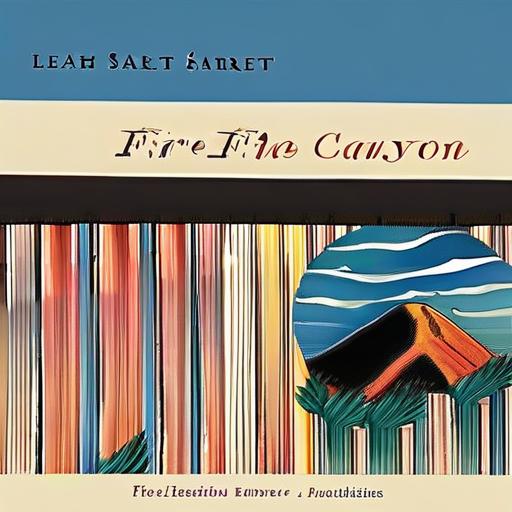
Fire in the Canyon: Religion, Migration, and the Mexican Dream(New York: New
York University Press, 2013), xi + 239 pp. $25.00 paperback.
Migration is a matter of life and death. Although the traditional theories of migration attribute its cause to social factors, Leah Saret, a teacher of reli- gion at Arizona State University, has carefully argued that religion plays a role in the migration experience. In her important study on Mexican migration to the United States of American, Fire in the Canyon, she examines the rela- tionship between religion, migration and the dream of a better life. For Saret, religion is not necessarily the cause for migration but a source for dealing with it.
After providing a very useful over-view of her study, she discusses her work in three sections. Commencing with the historical context, she addresses the vital issue of the origin and development of Pentecostal religion in Central Mexico and how it shaped the practitioners’ world-view. More specifically, she examines social and religious changes through the optic of Pentecostalism. Saret offers an ecumenical perspective of the relationship between religion and migration. Showing both the Protestant and catholic theological understand- ings of this development, she skillfully articulates the tensions between both religious traditions. Pentecostals attribute social transformation to a spiritual source but Roman Catholics believe that this transformation resides in a phys- ical source. Despite this ideological difference, both religious traditions found a common ground in working together for the common good. Also, equally appealing, is Saret’s weaving of historical details with ideas, issues and persons into a distinct narrative.
What is problematic, however, is that while Saret acknowledges the religious and theological diversity of migrant communities, she uncritically equates Pentecostalism with Protestantism. Notwithstanding this misconception, she shows that religious ecumenism is not enough to transform society. Persistent poverty engenders the relentless search for a better life. Here, this search employs religion as a tool to help understand the migration experience.
But the study does not stop with the historical context. It continues with a theological account of migration. It examines the relationship between migra- tion and Pentecostalism to construct a theology of migration. Attention is given to religious practices such as prayer, fasting and worship services that are offered for or on behalf of those who are beginning, on the journey or have completed the migration journey. Rather than depending solely on human resources, they also appeal to the Divine for help for protection from dangers, provision for food and opportunities for securing a dignified life, healing for
© koninklijke brill nv, leiden, 2015 | doi: 10.1163/15700747-03703011
1
428
book reviews
the sick and good for others. These practices are expressions of faith grounded in a prosperity theology reflecting the belief that God wills a good life for all persons.
Still, this study is more than the historical context and theology of migration. It also consists of a practical aspect. Saret is wise to intentionally address the specific project of the migrants. Through the project, “Caminata Nocturna,” Saret uses this as a paradigm to dramatize the migration experience. It is both a form of eco-tourism to give visitors to the country insights and a personal experience of the migration journey. Above all, this practical aspect of the book gives a balanced view of migration by showing that no person should have to migrate in order to make a better life. According to Saret, migration is not the only or absolute solution to poverty. After explaining some of the negative aspects of migration, she proposes some possible solutions. She offers a contextual philosophical world-view which grounds life in one’s heritage and culture consisting of the principles of creative imagination, commitment to place, cooperation, autonomy, hospitality, hard work and communality. These are important principles for the local community but it is not clear how they apply to addressing migration as a national and global issue. Yet, the book reflects the relationship between the local and global.
Besides this concern, while this book is not a study on theology, it provides some theological insights of migration. For example, the idea of “border” when interpreted theologically has a different understanding from that of the legal and political institutions. Pentecostalism sees society as a world without bor- ders. It seeks to redefine the idea of nation and state. Furthermore, this theo- logical perspective raises questions about immigration policies by calling for a closer examination of the cause of migration while acknowledging that this is a problem. A more compelling feature of the study is that it does not attribute religious cause or solution to migration. Migration is a problem humans cre- ated. As such, humans can solve it. Yet, what religion does is to provide the resources for doing so. Thus, it demonstrates that religion is not a crutch nor does it spiritualize reality but it is a resource to interpret and provide meaning for life. More importantly, Fire in the Canyon helps to rescue Christian religion from the mistaken notion of the separation of the secular from the sacred as well as a powerful witness in defense of the interwoven and essential relation- ship between religion and personal and public life.
Still, an unanswered question is, what difference would it make had this study been done by a Mexican person? While the author tries to identify with the people through their migration experience, the more this is done, the more it is revealed that this is a study about other people. Again, this is another case of treating those society considers as outsiders as subjects of
PNEUMA 37 (2015) 413–435
2
book reviews
429
study. Probably, this should serve to engender further studies on migration from the migrant’s perspective. Yet, this study is an important contribution to migration studies, Pentecostal theology and the wider field of religion and the migration experience. While it is about the Mexican migration experience, it has implications for and is a resource for migration on a whole, especially that of the two-thirds world.
Delroy A. Reid-Salmon
Research Fellow, Oxford Center For Christianity and Culture, Regent’s Park College,uk
PNEUMA 37 (2015) 413–435
3